







How to Boost Workplace Performance With a New Office Design
 Story by:
Business Blog
Story by:
Business Blog
Once coffee no longer creates momentum, a considered office refresh can help revive the momentum of the whole office. A thought-out layout makes the people more comfortable, open, and concentrated, which creates an environment where the ideas flow, and cooperation seems to be a natural process. The changes contribute to innovation and assist teams in feeling appreciated, which is essential in the retention and satisfaction of teams in the long term.
This balance can be realised with the help of design decisions that are based on research. With the discussion on workplace wellness steadily increasing, contemporary offices are adopting ergonomics and silent areas, lighting that improves mood, and biophilics that bring the feeling of nature into an office. Such design decisions are subtle reflections of dating space desires as well: cosiness, comfort, and places that facilitate non-pressured real communication. The professional or personal interactions are likely to be more natural in a space that is conducive to well-being.
Office Layout Mistakes to Avoid (and How to Fix Them)
To identify what is not working, first, look around your office really well.
Consider the measures of productivity. Another idea that is worth considering to get a more accurate picture of morale and burnout is to collect employee feedback. What is the feeling about the existing design by your team?
A disorganised environment or old and untidy furniture may result in distraction and stress. If you feel your office design is hurting efficiency, it might be time to rethink your furniture choices, as it becomes a more conducive and productive place to work.
Adherence to office design trends without adjusting the options to yourteam’s requirements may lead to unmet traps such as the absence of a quiet space to concentrate on your work.
Is there a need to upgrade your office furniture?
It is enough to adjust even a chair so that the eye level is not placed too high on the monitor. Such Ergonomics studies in the National Library of Medicine discovered that 80 per cent of self-reported risk factors of musculoskeletal disorders (MSDs) were directly related to inappropriate desk arrangement,s with 60 per cent citing the absence of footrests as an issue.
A survey of wellness at workplace can provide insightful information towards ergonomics planning of an office.
How to Inspire Flow in Office Design
If you need a practical place to start with your design, start with the three “golden rules” of office layouts: organisation, furniture, and ambience.
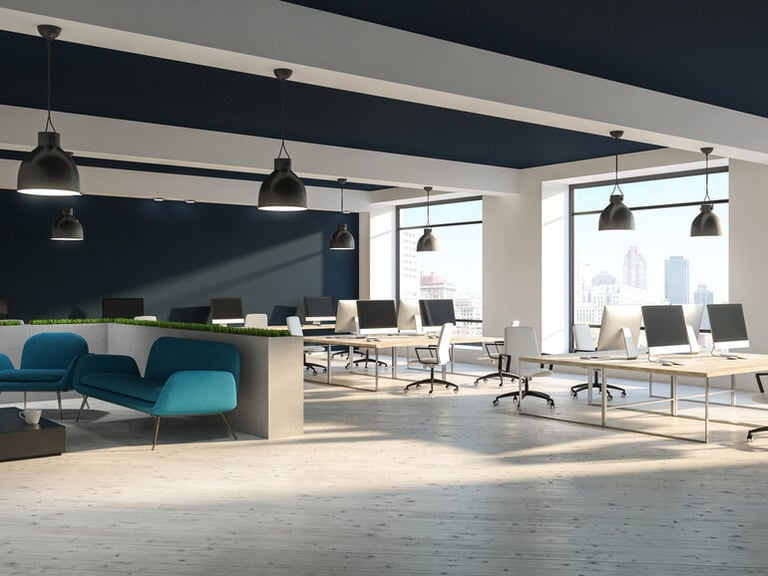
Rather than just choosing an open layout for movement, help employees focus their movement by focusing on activity-based working. The ABW method releases employees from single desks while providing separate working zones for specific projects. ABW-informed layouts recognise that marketing teams have different work needs than software engineers.
Make sure quiet zones are adequately soundproofed for deep focus. Build out areas designed for collaborative work, painted with colours that inspire collective creativity, like greens and purples that promote group calm, brainstorming, and innovation.
Place office kitchens away from work areas and quiet zones to further minimise disruptions from coffee makers and chatter.
Boost Productivity through Wellness
Ergonomic office furniture (i.e., the chairs with appropriate lumbar support) not only helps decrease the chances of musculoskeletal disorders but also promotes healthy blood flow. Such bodily comfort affects the way individuals present themselves in everyday life, both during conversation, which involves concentrating, being confident, and being present, all of which are much more important than in the office.
Employees with ABW-informed layouts are able to eliminate the sedentary-related issues such as inflammation and stress, which silently influence the mood, energy levels, and emotional availability. An environment where one is free to move around and feel comfortable will usually result in a reduced number of sick days and a more relaxed attitude, which will give space to even more healthy socialising and personal relationships.
The modular components include movable whiteboards, lightweight wheeled tables, and adjustable partitions, which can enable the teams to adjust fast. These characteristics facilitate both spontaneous teamwork and concentration, which makes the point that the adaptable environment is likely to promote a more lucid communication process and robust person-to-person connections, which are competencies that will be naturally transferred into the dating and relationship-oriented areas without making the connection forced.
Leverage Ambience and Nature
Is your office design creating a motivating or distracting sensory experience?
Walk around to see if the space is making the best use of natural light. You may need new windows that welcome natural light without inviting glare.
Before adding a new office plant, go bold with biophilic design. Add a natural wall that absorbs sound for better focus. Vertical gardens add freshness and inspiring colours to the office, creating a sense of airflow and positive energy.
Design the Perfect Office for Your Team
The first step toward a productive working space is recognising emotional comfort, energy levels, and the kind of confidence people want to carry through their day. When a space feels open and intentional, it naturally supports clearer communication, deeper focus, and more genuine collaboration. These same dynamics shape how people connect beyond work, influencing how trust and attraction grow through shared settings and meaningful experiences, a pattern also seen in engaging digital experiences that subtly guide interaction and response.
Looking ahead, a redesigned layout can support ambitious goals, from bold marketing initiatives to programs that reshape how people interact. The environments where ideas develop have a quiet but powerful influence on outcomes, affecting not only workplace performance but also how well-planned spaces encourage comfort, flow, and a sense of closeness that carries into personal relationships.


Comments 0
No Readers' Pick yet.