






Formula 1 Rules
 Story by:
Entertainment Blog
Story by:
Entertainment Blog
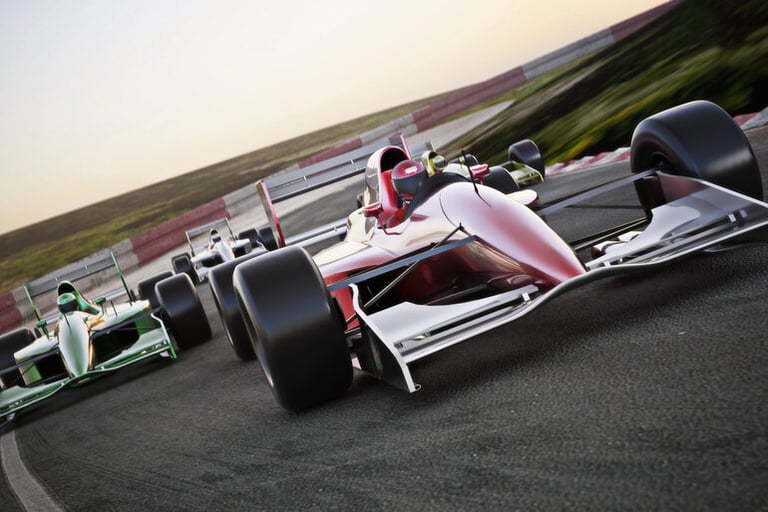
It is common for men to consider watching Formula 1 races as one of their hobbies. The Formula 1 is the most popular brand in the motor racing industry, and it has a network of rigid rules, checks, and restrictions. The International Automobile Federation (FIA) controls every aspect, including the car and the driver’s activity on the track. We will have a look at the fundamental regulations of Formula 1.
Such a structure predetermines all that comes ahead. In Formula 1, the key to success is the knowledge of the rules, the boundaries, and the impact of the tiniest decision on the result. The same attitude is transferred to the dating world, where things are not said but rather unwritten rules of conduct, limits, and time that seem to influence every single interaction. It is better to have an idea of the structure that regulates the experience first, as nothing significant occurs in a vacuum.
What is Formula 1?
Formula 1 is a circuit racing world championship that has been held since the year 1950. There are ten teams (constructors) with two cars in each that are driven by drivers. The season stages (over twenty, in various countries) include: in different countries (Australia to Abu Dhabi), in the USA to Japan. It is a race of its own in each stage, and the points should be given according to the results. The name ‘Formula’ refers to a set of technical requirements for the construction of cars. It is within these parameters that teams are required to develop their cars, and this is the reason why cars of various manufacturers may look alike but very different in details.
Formula 1 is regarded as the most glamorous of all motorsports as it attracts the finest engineers, drivers, and technology. Most of the solutions that are found in these cars end up making their way into the normal cars, like safety systems and aerodynamic solutions. The primary objective of a championship player is to get as many points as possible in the season. The standings have two titles: individual, for drivers, and team, for constructors. The victor is the one who will consistently score within the 10 and never retires.
You can relax here too – Enjoy free card games
How the Season Works
The Formula 1 season lasts almost a year, usually from March to November. The FIA calendar is approved in advance, but sometimes stages are changed due to weather conditions or political reasons. Each stage is called a ‘Grand Prix’ with the name of the country or city added: Monaco Grand Prix, Japanese Grand Prix. All the main stages are equal in importance regardless of where they are held. Some men would make watching this Grand Prix one of their hobbies as they monitor how the entire season unfolds. The season is structured like a marathon. Teams transport their equipment around the world, including cars, motorhomes, and spare parts.
There are usually one or two weeks between races, but at the end of the year, there can be three consecutive race weekends, a ‘triple header’. The fate of the championship is often decided in such series. Points are added up after each Grand Prix. There are individual rankings of the drivers, and there are team rankings. When the two drivers have an equal number of points, the driver is ranked higher. In the event of an equal number of wins, the number of seconds is counted, then the thirds, and so on until a difference is detected.
This method is referred to as the countback method. These results are confirmed at the end of the final race of the season. What this system highlights is attention to detail. When the margin is thin, every earlier moment carries weight. The experience in dating is no different, where fidelity, little touching, and unrelenting pushing are silent components that accumulate over time. It is seldom the single spectacular experience that influences the result, but the impressions that are produced by a series of experiences on the journey.
Formula 1 Race Rules and Race Weekends
Every Formula 1 race takes three days, from Friday to Sunday. It is not merely a one-race event, but a chain of occurrences where teams get to trial their cars, fight, and devise tactics. Two free practice sessions (60 minutes) are given on Friday. In such sessions, motorists inspect the car settings and the other technological specifications. The findings have no impact on the final positions, yet they assist in knowing the way the car will perform on the track. In some cases, the practice sessions are reduced or canceled because of rain or accidents.
Saturday morning has the third practice, then qualifying. This establishes the grid order starting on Sunday. Qualifying is split into three categories; in the first, the five slowest drivers are cut, in the second, another five, and in the third, the top ten take part in the selection of pole position, i.e., first position in the starting grid. All this is based on lap time; the one who is the fastest through the circuit is the winner. There are other stages where the sprint (a race lasting approximately 100 kilometres) is involved. It takes place on Saturday and awards additional points. In this format, qualifying is moved to Friday. Drivers take more risks because the sprint can affect their starting position and the condition of their car before the main race.
Points System
Points are the basis of the championship. The first 10 drivers are awarded points that are earned in every race. The winner achieves 25 points, the second place achieves 18, and the third place achieves 15 points. Then 12, 10, 8, 6, 4, 2, and one point to 10 th. The others involved receive nothing. In short-distance races, the first eight finishers receive eight points, seven to one, respectively. In case the race is not completed over the entire distance, the points can be deducted.
As an illustration, in case the race is not completed after covering 50-75% of the race, drivers get 75% of the points. In case it is under half done, fifty percent will be given. The amount of points that teams receive is the same as that of drivers: the two results of drivers are summed up. The FIA also works out the points of both standings at the end of the season and establishes the champions. Sometimes the fate of the title is decided in the last race; one point can separate first from second.
That’s why men who love watching Formula 1 stay committed through the entire season. That sense of anticipation is hard to walk away from. When the outcome stays uncertain until the very end, attention deepens, and investment grows. Dating often follows a similar rhythm, where consistency, patience, and showing up over time matter more than quick wins. The people who remain engaged are usually the ones who understand that real outcomes reveal themselves slowly.


Comments 0
No Readers' Pick yet.