








MERV 8 vs MERV 11 vs MERV 13: Which Air Filter Is Right for Your Home?
 Story by:
Home Improvement and DIY Blog
Story by:
Home Improvement and DIY Blog
Differences among MERV 8, MERV 11, and MERV 13 has an impact on both what particles the filter can capture and the flow of air through the HVAC system. The higher rating of MERV, the more effective the filter; however, the highest rating is not necessarily the best option for all homes. When it comes to creating a comfortable space for quality time with a spouse or new crush, the same practical approach can apply – make it work for you, not what it looks like on the surface. The choice of filter will depend on the requirements of the home, filter size, and type of HVAC system being used.
Rating of MERV: What is it Measuring?
The MERV scale shows how efficiently a filter removes airborne particles from the air passing through it. It is a comparison of the effectiveness of an HVAC filter to remove particles from air that flow through the filter. This current standard, 52.2-2025, is applied to assess air-cleaning devices measuring roughly 0.3 to 10 microns. MERV is not only the percentage of the “smallest particle” a filter will capture. It is a representation of the performance in certain particle-size ranges. The higher the rating, the more particles will be removed. MERV 8, MERV 11, and MERV 13 are major steps in home filtration.
MERV 8 vs MERV 11 vs MERV 13 at a Glance
| MERV Rating | Filtration Level | Typical Household Use | Fine-Particle Performance | HVAC/Airflow Considerations |
| MERV 8 | Basic | Pollen and dust | No minimum requirement for 0.3 and 1.0 micron particles | Often a practical residential baseline |
| MERV 11 | Stronger | Pets, dust and greater particle control | At least 20% efficiency at 0.3 and 1.0 microns | Check system guidance before upgrading |
| MERV 13 | Higher efficiency | Fine particles and smoke | At least 50% efficiency at 0.3 and 1.0 microns | Use when the system can accommodate it |
ASHRAE’s criteria also require MERV 8 to remove at least 70% of particles that fall in the 3–10 micron range, MERV 11 at least 85%, and MERV 13 at least 90%.
Finding the Right MERV Level for Residential Spaces
Begin at the end and work backwards. If a house has primarily normal pollen and dust, it may not need the same level of filtering as a home that has pets or has a lot of smoke in its environment or is more likely to want to see that there are fewer fine particles in the air. Your priorities can also shift as your house is used to spending time with a special someone in it. Whether you’re hosting a date at home or sharing a space with someone else, it doesn’t need to involve much of a change to make the space feel fresher and more welcoming, but taking into consideration the quality of air and comfort of the space can help.
Consider:
- Pets and the amount of hair, dander, and tracked-in dust
- Outdoor pollen and local air quality
- Wildfire smoke or other fine-particle exposure
- How quickly filters become dirty
- The HVAC manufacturer’s filter recommendations
- Whether the system can maintain the proper airflow using a higher-performing filter
For small-particle filtration, the EPA usually recommends MERV 13 or the highest rating the system’s filter slot and fan can accommodate. That does not mean every homeowner should install MERV 13 without checking the equipment first.
Confirm Your Filter Size and HVAC Compatibility Before Buying
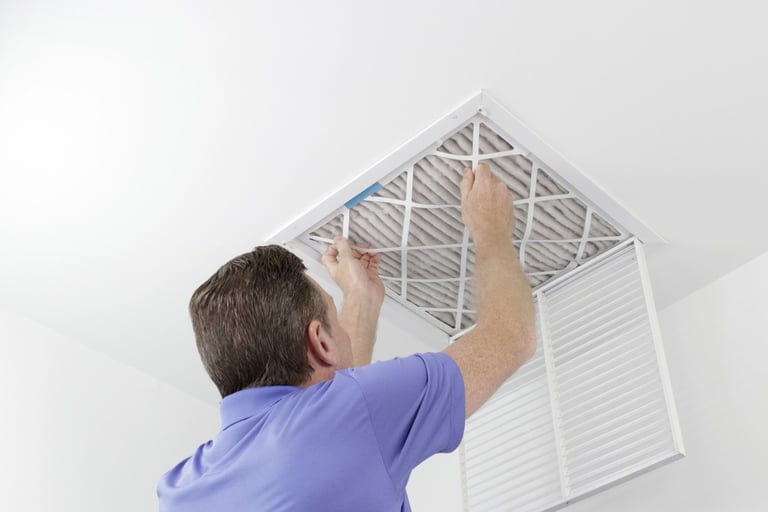
Before changing either the size or level of filtration, read the print on the dimensions of your current filter and consult the HVAC manual. If it is not a good fit, air can pass around the filter media, reducing its effectiveness. EPA also advises a snug fit to ensure the air flows through the filter, not around the filter. Once you know the correct dimensions and an appropriate rating for the system, buy furnace air filters that match both your HVAC requirements and household filtration needs.
MERV 8: A Practical Choice for Basic Household Filtration
MERV 8 is a good choice for most homes. It filters significantly higher amounts of larger particles in the MERV test ranges and is effective for general pollen, dust, and other larger airborne particles in the air. It can be used without having to worry about stringent filtration requirements and can offer a good balance for those homes that do not. Proper sizing and replacement still apply!
Greater Dust Filter for Pets and Smaller Filter Particle Size (MERV 11).
MERV 11 is an improved version over the MERV 8 because there are minimum efficiencies for smaller particles in MERV 11 that are not in MERV 8. ASHRAE criteria call for a minimum efficiency of 20% for filtering particles of 0.3-1.0 microns and a minimum efficiency of 65% for filtering particles of 1.0-3.0 microns. This can be useful for homes that have pets, generate a lot more dust, or may be desired by some homeowners who want to have greater control over the fine particles without needing to change filters to MERV 13.
MERV 13: Fine Particle and Smoke Higher-efficiency Filtering.
These three ratings have the highest fine-particle level in MERV 13. Must be ≥ 50% efficient for particles 0.3 – 1 microns and ≥ 85% for particles 1 – 3 microns. MERV 13 is especially important if there is a concern for smoke or other fine particles in the air.
Will high MERV Ratings “Choke” Airflow?
Filters designed for finer particle capture may slow airflow, but other factors can also contribute to resistance. The size of the filter media, thickness of the filter, filter pleat characteristics, filter surface area, flow rates, and load of dust all affect the pressure drop. ASHRAE recommends examining whether there are any issues with the pressure drop or airflow reduction of an HVAC system using a filter change. Filters must not necessarily have the same resistance properties from one filter manufacturer to another, and manufacturer’s specifications and HVAC guidance are more important than those of the MERV number.
Should Filters with a MERV 8, 11 or 13 Rating Be Changed?
No “replace” interval based on MERV rating. The life of a filter depends on the amount of time the HVAC units run, pets, dust and smoke exposure, filter design, and manufacturer instructions. ENERGY STAR suggests that central HVAC filters be changed monthly, preferably during heavy use periods, and when they are dirty. The general information it provides is to change them at least every three months. Regular inspection is more helpful than a fixed date; if homes have more particles in them, they might need changes earlier.
Frequently Asked Questions
What’s the actual difference between MERV 13 and a home?
Not necessarily. Many residential systems are suitable to use MERV 13, but this rating depends on the fan, filter slot, and system design, EPA states. If in doubt, consult the HVAC manual or hire a professional HVAC specialist for advice.
Is it better to have a MERV 11 filter or a MERV 8 filter?
MERV 11 will be more efficient at removing particles, particularly the smaller ones. The best option for a specific house will depend on the type of air conditioning system it has and its filtration requirements.
Is it possible for a higher MERV to harm an HVAC system?
When a filter does not allow enough water to flow through the system because of the amount of resistance or if it becomes so dirty that it creates too much resistance, it can cause problems. Appropriate sizing, equipment rotation, and equipment instructions are followed to ensure proper airflow and system performance.
Selecting the Best MERV Rating for Your Home
MERV 8, MERV 11, and MERV 13 are different, each with a different purpose. The three provide basic filtering (MERV 8), more fine particle efficiency (MERV 11), and the highest fine particle efficiency (MERV 13). The superior filter would be the one that delivers the correct filtration, fits correctly, and is compatible with your HVAC.
When it comes to making your home feel warm and comfortable, that same sense of normal can find its way into the first date with a cup of coffee or simply when you’re catching up with a friend whom you care for after a long day. Keeping the environment clean, comfortable, and inviting is not about creating a distraction in the environment; it’s about making the world a more pleasant place to be and making the conversation more pleasant.


Comments 0
No Readers' Pick yet.