








How to Apologize With Flowers and Actually Mean It
 Story by:
Dating Blog
Story by:
Dating Blog
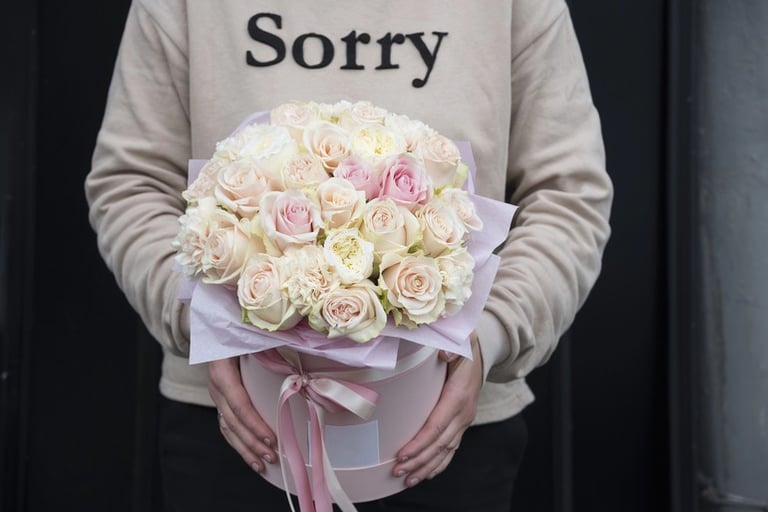
Most men approach apology flowers the same way they approach assembling furniture: grab what looks right, skip the instructions, and hope it works out. Sometimes it does. More often, they end up with something that doesn’t quite hold together and a vague sense that they missed something important. The flower, when used properly, is one of the best apologies a man can muster, as well as being one of the least loaded with connotations or connotations that can be avoided. The right gesture, with the right flower, in the right place, at the right time, can quickly descend into a predisposing aggravation. So, how to do it correctly?
Why Flowers Work in the First Place
But, before I discuss the mechanics, it would be wise to refresh you on what it is that makes flowers work at all. It’s not arbitrary. Flowers have been used as symbols in nearly all human cultures for thousands of years. It became customary and evolved into the language of flowers, floriography, which relied on the idea that certain flowers carried certain meanings, and that it was entirely possible to send the wrong flower and ruin a relationship. Well, not so stiff and keen about it now, but the driving force is still the same. Much like a thoughtful joke can make her laugh and instantly communicate warmth and affection, flowers often convey emotions that words alone struggle to express.
The following things are all being communicated: You realized something went wrong and you took action rather than waiting it out; you thought enough of the situation to go to a bulb of flowers rather than just texting; you felt you had to go out of your way to find flowers instead of waiting for the candle to go out. A flower is a symbol of apology. The next morning, as all else has died down, it remains… The issue is that the majority of men are using flowers as an alternative to an apology, instead of adding them to. Giving a bouquet without a true conversation is the equivalent of holding a bouquet of petals. Giving a bouquet without a conversation is not the same thing as holding a bunch of flowers. It means, “I’d like this to be over,” not “I understand what happened. It means ‘I’d like this to be over’, not ‘I understand what happened’.
She’ll experience the effects before her eyes. Aside from the gifts, words that you will offer in the name of love will have a greater impact on those you date than any gift. Communication, self-awareness, and a desire to solve issues head-on are the foundations of healthy relationships – not romance. Flowers may be a way of showing care, but it has a lot more meaning when they come in the wake of a sincere attempt to listen, acknowledge errors, and demonstrate a willingness to build trust with an honest conversation.
Match the Flower to the Situation
It is here that most men are losing a lot of value. It can be fine to use a generic rose as long as it is on the subject. It’s better to use the right flower for the right situation. Let’s get the nitty-gritty of how it works. In known relationships, red roses are the typical symbol of romantic apologies and remain one of the most recognizable romantic gestures when paired with genuine accountability. They do not convey ambivalent messages about their love and passion. Red roses are appropriate for a serious apology in a long-term relationship because they will make it no less impactful and not add any padding to the message. He (or she) says, “I love you, and I want to work this out. Pink roses are more suitable in newer relationships, or when you’re trying to apologize in a warm manner. They convey such adoration and unchanged concern without an oxymoron as red.
Pink roses ensure the right tone for the girlfriend, and when they are not deadly serious, they manage to deliver the message for the screw-up. When you apologise, you are asking for forgiveness and hope for a fresh start, and it is the expression of forgiveness and a fresh start that white tulips represent. They are one of these options that have been underutilized and convey more exactness than the regular bouquet. If you want to sincerely apologize, it is played with purple hyacinth. It’s been the mark of mourning and remorse since the times of the Ancient Greeks and has a particular connotation not only against any rose but more so than any of them. If you really did it already and you want the flower to tell you that, it will tell you that, “Yeah, guys, I caught you, I know you did.” Sunflowers are for the woman who prefers warmth and sincere than romantic. They are light, friendly, and expressive, exuding love and faithfulness; they are the appropriate ones for a relationship that requires openness, not formalities.
Get the Quantity Right
The number of flowers you send carries its own meaning, and getting it wrong undermines the gesture. A single stem says you grabbed something on the way. Unless the situation is genuinely minor and spontaneous, one flower reads as minimal effort. Six flowers are an underrated number for moderate apologies. Substantial enough to communicate seriousness without going overboard. Pairs well with a genuine conversation. A dozen is the standard for a reason. It’s recognizable, it’s substantial, and it signals real intent.
For mid-level screwups, a dozen is usually the right call. Two dozen is a statement. You’re acknowledging something significant happened, and you understand the weight of it. Use for the serious situations that call for a gesture that matches the moment. Anything beyond that starts to feel like you’re trying to overwhelm rather than apologize. Restraint communicates more sincerity than volume.
The Timing Question
Flowers delivered immediately carry more weight than flowers delivered after a cooling-off period. A gesture made while the situation is still raw says you recognized what happened and acted. A gesture made three days later says you thought about it for a while and eventually decided to do something. Same-day delivery exists for exactly this reason. If you’ve accepted that flowers are the right move, the fastest path from decision to execution is apology flowers delivered directly, same day, while the moment still calls for them. The exception is when the situation is serious enough that showing up immediately would feel like rushing toward forgiveness rather than acknowledging the weight of what happened.
Read the room. Sometimes, a day of space followed by a genuine gesture lands better than immediate flowers with an underdeveloped apology. There’s another part of the dating ground that’s not talked much about, and it’s that time has as much meaning as intent. To maintain healthy relationships, you must be aware of your emotions, and sometimes you might have to let go of your partner when they are sad or hurt because of a bad relationship. It’s a lovely thing to do when it’s a part of some kind of serious discussion and grounding of accountability, so there’s more room for discussion and rebuilding any trust in a process.
What Has to Come With the Flowers
The flowers open the door. Here’s what has to walk through it. A real note. Not “I’m sorry, babe.” The specific thing that happened, your part in it, and what you intend to do differently. Three sentences done properly are worth more than a paragraph of defensive explanation. The word “but” is where apologies go to die. Leave it out. An actual conversation. The flowers signal that you’re ready to have it. Don’t let them do the talking for you. Say the thing. Let her respond. Don’t interrupt. Don’t turn it into a debate. Follow-through. An apology that doesn’t change anything is a press release. What you do in the days after the gesture is the actual apology. The flowers are the opening statement. While choosing blooms thoughtfully can help communicate sincerity, the meaning behind them only carries weight when it is supported by honest words and consistent actions.
How to Calibrate the Gesture to the Situation
This isn’t necessarily the same response that should be made for every fail, and a large part of the right kind of apology is the right kind of response. If the punishment fits the crime, you are awkward because you were on to someone’s case! Don’t come up with an inadequate reaction to anything serious.
From a very real point of view: How long has she been upset? How specific is the problem? How much does the gesture have to convey the magnitude of the problem? A useful framework for calibrating this is the kind of self-assessment tool that Apology Flowers built specifically for this problem: To learn the best way to measure and determine where you are, and then, how to react. The purpose is a movement that matches in time, a moment. Too large (but not too much) to overlook. Not overwhelmingly/soundly big that it makes you feel like you’re paying for the exit from a meeting.
The Short Version
It’s because apology flowers are physical objects that you took steps to fix the situation. They come to a halt when they’re used instead of the apology, not in addition to it. Selection of an appropriate flower for the conditions. Make sure there is a sufficient quantity of the right type. Move fast. Dress appropriately, with a genuine note and real dialogue. Follow through afterward. That’s all there is to it. That’s the only thing that is not details is details.
Also, in dates, the memories that stick with them best are the ones that are so sincere but simple. If you want a goodwill gesture to have as much impact as it deserves, it should be backed by consistent effort, attention, and thought. While flowers can be an expression of feeling that words cannot, connection can only be fostered by being present, taking ownership, and supporting the other person’s relationship with this connection long after it is given as a present.


Comments 0
No Readers' Pick yet.