








An Interview With Hair Transplant Expert Dr. Brett Bolton
Hair transplant risks explained: What to know about Turkey clinics, pricing, and choosing a qualified surgeon.
 Story by:
Editorial Dept.
Story by:
Editorial Dept.
In the past several years, hair transplant technology has come a long ways. Current treatment outcomes are unimaginable compared to what was available in decades past. As a result, there is a newly invigorated demand for hair transplants, and the market has responded. In particular, Turkey has emerged as a destination for cheap hair transplants, with viral images emerging of flights departing Turkey full of men who have clearly just gotten hair transplants. However, these international hair transplant destinations carry risks as well, with affordability coming at the cost of quality and accountbility.
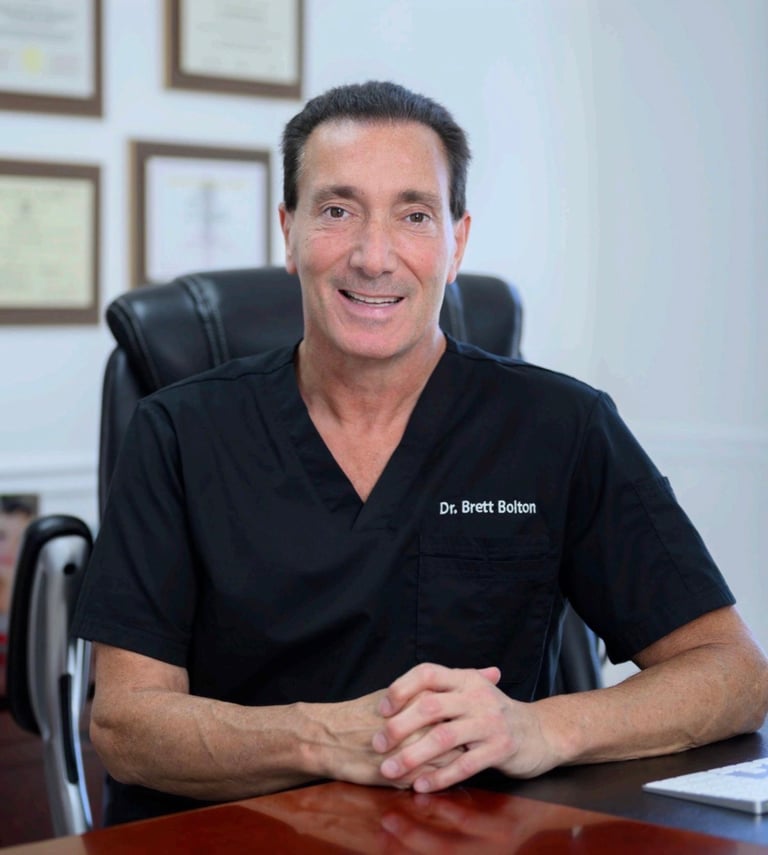
In this interview, Dr. Brett Bolton, a 29-year veteran of the hair treatment industry, details the risks and red-flags of budget hair transplant treatments. Beyond the obvious, he outlines the unexpected risks that can come from hair transplants that are performed internationally, as well as what to look for when you’re trying to choose a hair treatment specialist. Keep reading to learn about his industry insights.
For readers who may not know you yet, can you tell us about your background in hair restoration and what led you to specialize exclusively in this field?
I wanted to be a doctor from the time I was a little boy. My father, Dr. Alan Bolton, was an obstetrician-gynecologist, and he was my idol growing up. He used to take me to the hospital with him and let me do rounds, so medicine was always the path I saw for myself.
When I eventually made my way to Florida, I started realizing that managed care and insurance companies were beginning to control too much of what doctors could do. I did not want to spend my career having someone else tell me which patients I could admit or what medications I could prescribe. My father told me that if I wanted to avoid that kind of system, I should look at cosmetic medicine. Around that time, a friend connected me with an international hair restoration company that was looking for someone, and I got hired while I was still in my internship. I came out of training and went straight into hair restoration, and that is all I have ever done. I am now going on 30 years in the field, and I still wake up excited to go to work every day.
You’ve spent nearly three decades performing hair restoration procedures. How has the field changed during that time, both technologically and in terms of patient expectations?
The field has changed dramatically. When I first got started, older techniques like flaps, scalp reductions, and large hair plugs were still being presented at major meetings. I remember being at a transplant conference in Barcelona before I even started practicing, and when one-hair grafts were introduced, it completely changed the industry. That was the beginning of a more refined, natural approach.
From there, the field moved away from those big plug techniques and toward follicular unit transplantation. Strip harvesting was a major advancement because it let us actually see the follicles, evaluate the graft quality, and move hair more efficiently and more naturally. In the hands of a skilled surgeon, this allowed for excellent results with less surgery.
What I have seen over time is that patients now expect more natural-looking outcomes, and they should. But I also think the field took a wrong turn when many doctors went back to punch-based harvesting under a new name. In my opinion, that has created a lot of problems in the donor area. So technologically, there have been real advances, but not every trend is actually an improvement.
Turkey has become a major destination for hair transplant surgery. What is driving so many patients to travel abroad for these procedures?
The biggest thing driving that is price. People get fixated on cost, and they see these package deals that look very attractive. They see the flights, the limo pickup, the hotel, the social media posts, and they think they are getting a great deal.
But what I always tell people is this: in medicine, price should be the last thing you focus on. You should be choosing the doctor, not shopping for the cheapest number. What concerns me is that many patients are being sold an experience, not necessarily quality medical care. The real question is: who is actually working on you, and what happens if something goes wrong?
In the United States, a transplant may cost $10,000 to $15,000, while clinics abroad advertise procedures for around $2,000. Why should patients look beyond that price comparison?
Because you get what you pay for. If you want a quality physician with years of experience, accountability, and long-term follow-up, that has value. In my case, I have been doing this for nearly 30 years, my work is guaranteed, and if there is an issue, I fix it. That matters.
What patients need to understand is that if a cheap procedure goes wrong and the donor gets damaged, or the scalp is injured, or the work has to be repaired, it can end up costing them more than if they had gone to the right doctor the first time. That is the trap. They think they are saving money up front, but they may be creating a much more expensive and permanent problem.
What are the potential complications that can occur from a hair transplant?
The good news is that hair transplantation is generally very safe, and most complications are minimal when the patient follows instructions and the procedure is done properly. But complications can absolutely happen.
One of the most common issues is trauma to the grafts. Patients bump their head, knock grafts out, or do not follow post-op instructions the way they should. Infection is another concern, even though it is rare. Healing can also vary from patient to patient. So while it is usually a straightforward procedure, you still need to respect it like surgery and treat the recovery seriously.
Beyond health risks, what other issues can arise from hair transplants that were performed abroad?
Beyond the immediate medical risks, the biggest concern is what happens to the donor area. If it is harvested poorly, you can end up with donor depletion, fibrosis, hypersensitivity, disruption to the blood supply, disruption to nerve pathways, and a thin, moth-eaten look in the back of the scalp.
Those are not small problems. They can affect how the scalp looks, how it heals, how it feels, and whether you even have enough donor left for a future procedure. So this is not just about whether the hair grows. It is also about what kind of damage may have been done in the process.
For patients experiencing these complications, what courses of action do they have?
The first thing they need is evaluation by a qualified hair restoration physician who knows how to assess donor damage, graft placement, healing issues, and whether correction is even possible. In some cases, repair can be done. In some cases, the patient may need to wait and heal before anything can be addressed.
The real issue, though, is recourse. If you had your surgery overseas and something goes wrong, what is your practical recourse? That is the question people need to ask themselves before they ever book the procedure. Because once the donor is damaged, fixing it is usually more difficult and more expensive than doing it correctly from the start.
Are there specific red flags in a hair transplant facility that should immediately make a patient reconsider?
Absolutely. One major red flag is when a clinic shows you great photos, but they cannot tell you exactly which doctor is doing your case. Another is when you are being sold on the company or the brand, rather than on the specific physician and team who will be working on you.
I always tell patients: do not just look at the clinic’s general results. Ask to see the actual before-and-afters of the doctor performing your surgery. Ask who the staff are. Ask who is doing the harvesting, who is making the sites, and who is placing the grafts. If those answers are vague or if there is no consistency, that should absolutely make you stop and reconsider.
Many people don’t think about follow-up care when they travel for surgery. Why is post-procedure care so critical for hair transplant success?
Because the surgery does not end when you leave the clinic. The healing period matters. Protecting the grafts matters. Watching for infection matters. Being able to reach your doctor if something happens matters.
I have had patients who bumped their head right after surgery and came right back in so we could address it immediately. That kind of follow-up can make a real difference. If you are in another country and then get on a plane and go home, you may not have that same access. That is a serious issue that people do not think through enough.
For someone currently considering a hair transplant in the U.S. or abroad, what steps would you recommend to make sure they’re choosing a reputable provider and protecting their long-term results?
My advice is simple: choose the doctor, not the price. Find out exactly who is doing the surgery. Look at that doctor’s own results, not just the clinic’s marketing. Ask who will be working on you and what each person’s role is. Ask what happens if there is a complication. Ask what kind of follow-up care is provided. Ask what your recourse is if the outcome is poor.
Most importantly, think long-term. A hair transplant is not just about today. It is about protecting your donor area, preserving your future options, and making sure you are in the hands of someone who knows what they are doing and stands behind their work.
Dr. Brett Bolton is the founder of Great Hair Transplants and creator of the MaxHarvest™ technique. Practicing exclusively in hair transplant surgery for 28 years, he has treated patients internationally and is recognized as a leading authority in high-density, single-session restoration. With 822 verified five-star reviews, Dr. Bolton maintains one of the highest patient satisfaction ratings in cosmetic medicine.


Comments 0
No Readers' Pick yet.