








Understanding Cannabis Flower Grades: What Separates Premium from Budget Buds
 Story by:
Cannabis Blog
A cannabis dispensary’s interior can evoke the sensation of meeting someone for the first time: while first impressions are important, you don’t completely know the other person. Two jars can be the same strain name; they might have comparably high levels of THC and almost the same weight, but one jar will be significantly more expensive than the other. With the question of the premium flower versus less expensive pay option, consumers are now faced with an important question: what are they being paid for when they opt for premium? Its strength is, of course, not the sole factor. All genetic, cultural, harvesting, trimming, curing methods, terpene preservation, trichome development, testing, and storage come into play in influencing quality. An understanding of these factors helps to “get past” the marketing message and the appealing packaging on items, which will help people think about the better choices in dating—genuine qualities have more value than an attractive first impression.
Cannabis flower is an agricultural product, similar to coffee, wine, or other products, and the quality can widely differ between batches. Discussions both in the science and industry communities on the quality of cannabis are increasingly focused on measurable attributes like cannabinoid content, terpene analysis, contamination testing, physical characteristics, and post-harvest processes. For instance, the United States Pharmacopeia (USP) has recognized the significance of required standardized testing and quality specifications for cannabis inflorescence, such as cannabinoid and contaminant analysis. In the eyes of the consumer, this translates to value-added knowledge about flower grades that begins much further beyond the label, into the garden and right to the end of the pipeline.
What Cannabis Flower Grades Actually Mean
The term “grade” can be misleading because cannabis does not have one universally accepted grading system that works across every legal market. Different cultivators, retailers, and independent organizations may use terms such as premium, top-shelf, craft, mids, or budget to describe products, including offerings from brands specializing in rooted cannabis.
These descriptions may convey expectations, but are not always scientific formalities. Using the proper tools, some independent grading systems evaluate factors like the aroma, color, structure, and trichome development; laboratory testing can give objective details regarding the cannabinoids, terpenes, and contamination found in the flower.
Premium flower more often describes high-quality cannabis, not so much because of a particularly high concentration of THC, but as a product that exhibits high levels of performance in a number of quality metrics. A good higher-end bud may be dense but still be healthy, contain a good amount of trichomes, have a distinct smell, have been properly maintained to not have lost any terpenes, and have appropriate moisture. Properly dried and cured as well. Budget flower, on the other hand, can be produced more with a focus on efficiency and cost. That doesn’t necessarily mean it’s not a valuable learning experience. It’s not required that a budget product be the driest of party poopers, and when properly cultivated (and tested), it can be just as satisfying, if not more so.
This is made very apparent when consumers cease to believe that price is synonymous with value. Variances in production cost are the result of differences in cultivation environment, labor, genetics, trimming method, testing needs, packaging, and distribution. For instance, if grown outdoors, it can be done with natural sunlight and other farming methods; or if grown indoors, it can be grown with a high degree of environmental controls. None of these are designed to ensure better flowers automatically. It is important how well the producer can maintain the plant or keep its desirable qualities from harvesting to post-harvest.
Trichomes Are One of the Most Visible Quality Indicators
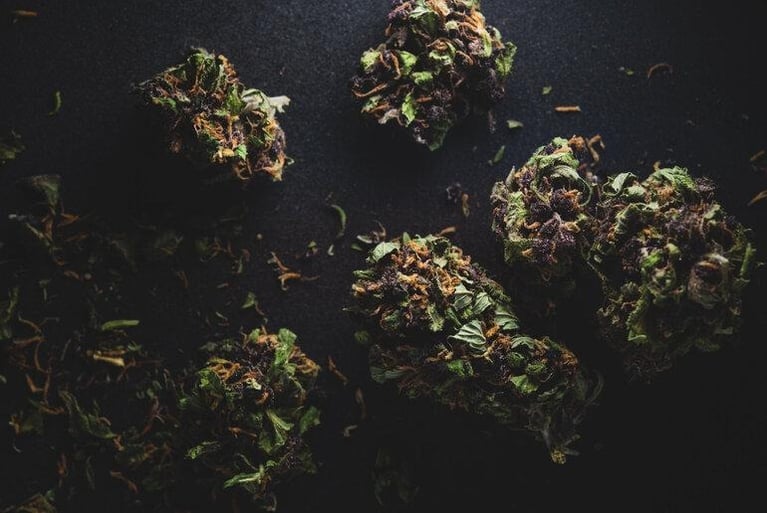
A good place to start examining physical characteristics of cannabis is with trichome development. Every flower of the cannabis has a great deal of tiny structures on the surface called trichomes, and the majority of the cannabinoids and aromatic compounds linked to cannabis plants are connected with the resin-producing structures. In sufficient light or magnification, the flower can appear frosted, especially due to the trichome coverage. Any flower with dense or intact trichomes can then be a good visual clue that it has a good amount of resin.
But it shouldn’t be presumed that a product with more conspicuous trichomes will result in a better experience. This also applies to the quality of the trichomes. Trichomes can also be broken off the flower during the harvesting, trimming, transporting, and packing process. Tight bud conditions can also cause wilting and create brittle buds. Handling is one of the areas premium producers are likely to be interested in due to the importance of maintaining the physical integrity of the flower in order to maintain the product’s desirable compounds sought after by consumers. Undoubtedly, a jar adorned with beautiful “frost” will be attractive, but it does not justify the investment if it has negligible or no aroma or disappointing laboratory results, if it is no longer fresh, or if it has not been properly stored.
Color can also be used as a guide, but it shouldn’t be used as an absolute reference for grades. The color may vary from the normal range of green, purple, orange, or other colours depending upon genetic traits and environmental conditions in the growing of flowers. The most important thing is that the product is ‘fresh’ and proper preservation has been used. Any browning, mothballing, or excessive dryness (visible contamination or unusual growth) should be a concern. Producers should never take visual appearance as an indicator of quality; it is a good tool as part of a comprehensive evaluation.
Terpenes and Aroma Help Separate Average Flower From Exceptional Flower
Another main quality mark that can help differentiate various flower quality grades is aroma. There are a lot of aromatic compounds in cannabis, such as terpenes, that give each cultivar the unique fragrance it has. Depending on the chemistry of the plant, the fragrance can be citrus, pine, floral, earthy, herbal, or fuel. An identifiable scent suggests good preservation of volatiles following harvest. If a flower has a very hay/old smell, it probably lost a lot of its terpenes or was stored poorly.
But consumers shouldn’t use just the percentage of THC to ensure they are making the best quality product available. The THC primarily conveys information regarding the strength of the cannabinoids. Does not reveal the full picture of the flower’s terpene makeup, freshness, curing, etc., or the overall chemical makeup of the flower. Newer cannabis education takes a closer look at the properties found in both terpenes and cannabinoids and works best to understand them in tandem, since two products containing equal amounts of THC can contain significantly different cannabinoid and terpene profiles.
The same principle applies when shopping through a retailer offering a broad selection, including options such as distro cannabis. Rather than choosing exclusively according to the highest advertised THC number, consumers can look at the available product information and consider aroma, terpene content, cultivation details, harvest or packaging dates where available, and laboratory results. This approach creates a more informed comparison between products at different price points and helps separate meaningful quality differences from simple marketing claims.
Cultivation and Harvesting Influence the Final Product
Good cannabis flower starts back at the plant. Breeding could be said to determine much of the potential of the plant, while cultivation practices determine how well this potential will be realized. The final characteristics of the flower can be affected by a variety of factors such as lighting, nutrient status, environmental conditions, plant health, and harvest timing. Expert growers are all about consistency; after all, good genetics can only be as good as the way it’s cultivated.
Harvesting is important, too. It’s crucial to wait for the right time to pick and to choose how to pick or handle cannabis flowers. Physical handling and lack of consistency in processing may damage the delicate structures and affect the uniformity of the batch. That’s why it can sometimes be more expensive to purchase a well-made flower. It is not obvious to the naked eye when considering the finished bud, but either the additional labor or the attention can affect its aroma, texture, appearance, and consistency.
Growing practices can’t be used as a quick indicator of quality. Indoor flowers can sometimes be perceived as being both high quality and pricey, while outdoor flowers can sometimes be perceived as being lower cost. In fact, both can lead to fantastic or substandard results. The other type of cultivation is greenhouses, a combination of controlled and natural cultivation environments. In the end, however, the floral product should be judged by its features and not any assumptions about cultivation location.
Curing and Moisture Make a Major Difference
Post-harvest activities such as drying and curing are among the most critical activities. The flower will dry naturally after harvest, and properly dried flowers ought to have a suitable moisture level for packaging. Curing provides producers with a bit more control of the finished product’s development and preservation. Even though the plant material is of good quality, bad post-harvest handling can result in a final product with harsh texture, loss of aroma, or produce flowers that are too dry.
The moisture balance is especially critical since too little or too much moisture can cause issues. Too dry can cause easy crumbling and faster loss of aroma, and too damp can promote microbial growth in the flower. Handling, protection from light and moisture,e and the control of storage conditions have thus been the focus of research and standards. Specific attention to cannabis quality review is given to the importance of storage conditions and protection from light and moisture in the United States Pharmacopeia.
Problems that occur due to moisture can often be spotted without special equipment by consumers. Well-preserved flowers are expected to have a “shelf life” and offer at least a measure of substance when handled. They should also not be soaking wet or abnormally spongy. The appearance of texture does not necessarily mean quality, but it can give clues to the quality of the flower even with normal storage. Essentially, high-quality cannabis can degrade to average quality when it comes to conditions for a prolonged period of time.
Why Laboratory Testing Matters More Than Marketing
Laboratory testing offers more information than visual inspection testing. If the requisite information about the cannabinoid concentration, the profile of terpenes, and some specific contaminants is required, a certificate of analysis can be provided for the given market. This is important because cannabis comes from a plant, so sometimes it’s impossible to gauge quality by sight. Identification, cannabinoid testing, and contamination testing for microbial contamination, pesticides, and mycotoxins,s as well as elemental contaminants, have been highlighted in the scientific literature as important tests for cannabis.
While the MTD is a number that is likely the easiest to spot on cannabis packaging, MTD should also be read carefully. A high score does not mean that the flower is fresh, more aromatic, better cured, or more pleasurable to smell. There may be other compounds in addition to THC and CBD in the complete cannabinoid profile. When viewing the larger laboratory profile, the information that you glean from that laboratory profile is probably more useful than just one number.
Testing is particularly useful since much of the information that consumers need can only be obtained by testing. The beauty of a flower can be gorgeous, yet it may nonetheless have a contamination problem that is not desirable, while a lower-priced-looking product may have a perfect “lab” profile. Consumers should thus be aware of existing testing data and buy products from regulated outlets, as available and as applicable, where they can ensure proper product labelling and safety information.
Storage Can Preserve or Destroy the Quality You Paid For
The quality difference between premium flowers and economy flowers doesn’t stop once the flowers come home. Cannabis storage can make a huge difference in how fast the desirable properties are lost. Cannabinoids, terpenes, and the flower’s condition can be impacted by heat, light, oxygen, and improper humidity. There has been great research on the storage environment of cannabis,s and the finding that concentrations of cannabinoids or terpene levels throughout the drying, curing, and storage process proves the importance of preservation after harvest.
The golden rule for consumers is: make sure cannabis can be kept away from unnecessary exposure to heat or cold, light, moisture, and too much air. Maintaining an airtight container in a cool and dark place, in a stable environment, can help keep the flower’s aroma and texture intact. No one’s idea is to make cannabis keep going forever, but to slow down the natural processes that endlessly alter the chemical and physical makeup of the plant.
This is also the reason why high-priced flower doesn’t necessarily mean that it will always be premium. If the product is not stored correctly, it will lose some of its original characteristics when being stored incorrectly. Conversely, reasonably priced flower that has been handled and stored correctly may still offer a satisfying experience and retain the characteristics of a quality bud. Quality is therefore a combination of production and preservation, not simply something determined by the price printed on the package.
How to Decide Between Premium and Budget Flower
The final decision between a higher-quality and lower-quality cannabis product will be driven by the specific characteristic(s) that are desired by the end-user. High quality may appeal more to an individual with a keen appreciation for complex aromas, strong terpene notes, presentation, and consistency with the flower being produced. Another consumer may want to buy tested flower that is fresh and of an appropriate seasoning, but be concerned about cost. No requirement that you have to buy the “largest” purchase!
The fundamentals are the basis of a practical comparison. Take into account its freshness, fragrance, trichome growth, form, water content, cannabinoid makeup, terpene data and proof, and packaging. However, think about whether the price difference seems warranted based on those characteristics. This can be much more useful than taking for granted words like “top shelf” that have a connotation of good quality.
The most informed cannabis consumers learn to distinguish measurable qualities from marketing language. Premium flower should demonstrate its value through consistent characteristics rather than relying solely on a premium price or attractive packaging. Budget flower should not automatically be dismissed either. When cultivated responsibly, properly tested, carefully cured, and stored correctly, less expensive cannabis can still offer a satisfactory product for consumers whose priorities are different.
Looking Beyond the Surface
Understanding cannabis flower grades is ultimately about learning what to look for rather than memorizing a hierarchy of labels. Premium flower tends to stand out through a combination of healthy structure, strong trichome development, preserved aroma, balanced moisture, careful cultivation, appropriate curing, and reliable testing. Budget flower may involve compromises in one or more of these areas, but price alone cannot determine whether a product is genuinely worthwhile. Looking at the complete picture allows consumers to make comparisons based on evidence rather than assumptions.
The most useful mindset is to view cannabis flower as an agricultural product whose quality depends on every stage of its journey. Genetics and cultivation establish its potential, harvesting and curing determine how well that potential is preserved, testing provides valuable objective information, and storage influences how much quality remains when the product is finally used. Paying attention to these details helps consumers understand the differences between premium and budget buds and make choices that reflect their priorities, preferences, and budget. Exploring practical budget ideas can also help people make thoughtful spending decisions without compromising what matters most. This approach extends beyond purchasing decisions, particularly in dating, where looking beyond surface-level appeal and recognizing the qualities that develop over time can lead to more meaningful connections.


Comments 0
No Readers' Pick yet.