






Games That Can Help People Boost Strategic Thinking in Life
 Story by:
Entertainment Blog
Story by:
Entertainment Blog
We all need to think about strategy at some point in life. Many of us work on these skills to improve our thinking processes. Games can even help to flex this ‘muscle’. The same awareness is usually transferred to dating. It is more focused, more purposeful, and it is helpful to read or watch cues when it is time to move forward and when it is time to stop. Being in a position to stop, think,k and make a deliberate reaction can also foster more meaningful communication, transforming the ordinary conversation into a meaningful relationship without making it too complicated.
Some games stay with people long after the screen is turned off or the board is packed away. It is not always about winning or losing. It is the way certain games quietly shape how decisions are made. Patterns start to stand out. Chess players know that life is often about thinking a few steps ahead. Strategy does not always mean complex rules or long explanations. Sometimes it grows from simple ideas repeated again and again. Which can help people to work on their thinking in this way?
Poker And The Art Of Reading Situations
Poker is often mentioned when people talk about strategic thinking. It blends decision-making with uncertainty in a way that feels natural once the basics are understood.
Different variants bring slightly different ways of doing things. Texas Hold’em is widely played and tends to focus on timing and reading situations. Players work with shared cards on the table while trying to judge when to stay involved and when to step back. Omaha gives each player more cards, which can open up more possibilities and make each hand feel a little more complex. Omaha still has the community card aspect. This means that there’s strategy and guessing or working out what an opponent is up to.
People who play Omaha poker online for real money know that the game is a way to encourage deep thought. What stands out is how the game shifts from moment to moment. A strong hand at one stage can become less useful later. A weaker position might turn into something better. This constant movement encourages flexible thinking rather than fixed plans. There is also an element of reading other players. Decisions are not made in isolation. People try to work out even if someone else around the table is bluffing or really has strong cards. People may spend time online exploring the way that others play certain hands and scenarios.
Chess And Planning Ahead
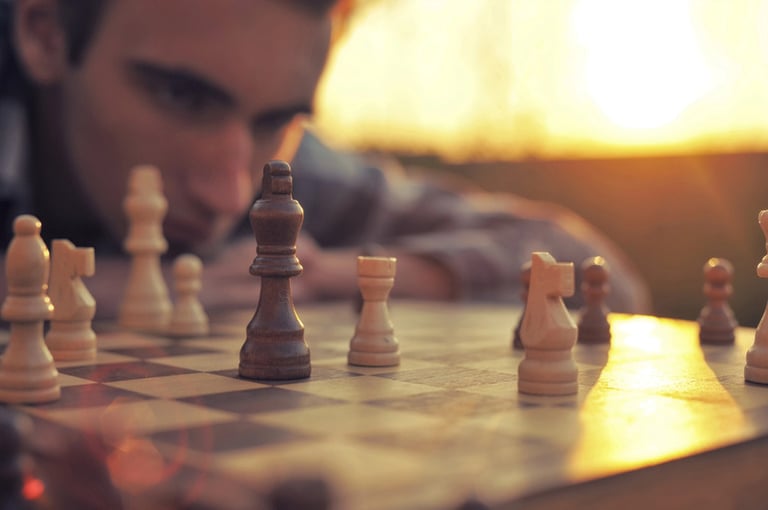
Chess takes a different approach. We even use chess as a euphemism for thinking ahead in life. There are no hidden cards or unknown variables. The challenge comes from planning and anticipating how the game might unfold. The same mentality slips into the dating process. Preliminary discussions, mutual moments, and even nuances will provide an idea of where the direction may take, and one who listens and does not overthink the process will be rewarded. It has nothing to do with rehearsing every action, but being sensitive to read the intent, take your time, and know that good relationships do not always come with impulse.
Each move affects what comes next. There are an almost mind-blowing number of different potential outcomes and ways that the game can play out. One decision may open possibilities or shut down opportunities. Players usually start to think then, thinking many steps ahead, trying to imagine what the board will look like in the future. Such an activity of pre-empting action instead of acting here and now can be transferred to other spheres. It encourages a more thoughtful approach where actions are linked together instead of being treated as separate choices. Chess also rewards patience. Rushing often leads to mistakes. Careful planning can gradually build an advantage. The game has made our list of the top potential hobbies.
Strategy Games And Resource Management
Strategy video games offer another way to develop this kind of thinking. Many of these games involve managing resources and responding to changing conditions. Games in this space often ask players to balance different priorities at once. Expanding too quickly can leave gaps. Finding a balance becomes part of the challenge. Titles that involve building cities or managing civilizations highlight this clearly. Decisions made early on can shape everything that follows. A small change at the start might lead to very different outcomes later. The Civilization games are a strong example of this. They demand that people think about the virtual future as they are plunged into this game. They can build empires and control politics as well as warfare in this virtual sandbox.
Puzzle Games And Problem Solving
Puzzle games might seem simple at first. They actually encourage a different kind of strategic thinking. Instead of managing large systems, the focus shifts to solving specific problems. Games like Sudoku or logic-based challenges ask players to look for patterns and connections. The solution is not always obvious. This means trial and error becomes part of the process. This can build a habit of approaching problems from different angles, much like exploring different games to watch to understand varying strategies and perspectives. If one idea does not work, another approach can be tested. This creates a more flexible way of thinking. Some puzzle games also reward efficiency. Finding a solution is one thing – finding a better or quicker solution adds another layer.
Turn-Based Games And Decision Timing
Turn-based games create space to think before acting. Unlike fast-paced games that require instant reactions, these allow time to consider different options. This pause can be valuable. It encourages weighing choices rather than acting on instinct alone. Each turn in board games becomes a moment to reflect and move forward with a clearer plan. Turn-based games are still being released even in the modern age. What connects all of these games is not a single skill, but a pattern of thinking. They encourage looking ahead and understanding how decisions link together. This builds gradually through repeated play. Poker introduces uncertainty and reading situations. Chess focuses on planning and structure. Strategy games explore balance and long-term thinking. Players can choose what suits their lifestyle.In the long run, these tendencies influence individual communication, approach to uncertainty, and interaction with others, aspects that are invariably transposed to dating experiences. A person who likes to read can be more likely to pick up on non-verbal signals, whereas a planner can create clarity and purpose in communication and time together. Similarly, habits developed through strategy, even through observing games to watch, can shape decision-making and patience, subtly influencing how people build trust, pace interactions, and assess compatibility, leaving a layer in the way relationships are built.


Comments 0
No Readers' Pick yet.