








3 Things That Are Typical for Swedish Men
 Story by:
Health and Wellness Blog
Story by:
Health and Wellness Blog
It is not just individual personality that influences masculinity. It is representative of culture, economic institutions, and long-term population policy. Sweden offers a clear example of how social forces shape everyday behavior and expectations placed on men. Over time, laws, workplace norms, and gender equality policies have influenced a view of masculinity that feels calm, reliable, and modern.
That influence carries into dating. Men are supposed to speak directly, maintain limits and relationships in moderation. Stability and consistency of emotions are more likely to be important than pretences. Maturity and consideration are prominent in this regard. Being attracted to each other is created through mutual respect, adopting a joint responsibility, and having a sense of being partnered.
They Don’t Smoke, And If They Use Nicotine, It’s Usually Snus
In Sweden, daily smoking is exceptionally low. In 2024, only 5.4% of the population aged 16 to 84 reported smoking daily. But that doesn’t mean nicotine has been given up entirely. Around 22% of men report using snus or nicotine pouches such as Velo daily. No more going outside every 45 minutes. No more smoke permeating clothes or hair. No more ashtray smell in apartments or cars. In a social context, this is more important than we think. Even among smokers, passive exposure and smell are often deal-breakers. In comparison, snus that is discreetly placed under the lip is virtually unnoticeable.
Cultural and Policy Background
The tradition of snus as a male habit has been practiced in Sweden for several centuries. This implies that with the tightening of the anti-smoking laws, there was already an alternative. This prohibition of smoking in restaurants and bars was launched in 2005, and later on outdoor areas like playgrounds and transport areas. Smoking simply became less convenient.
Tax policy also played a role. In 2024, taxes on tobacco increased by 9%, while those on snus decreased by 20%. Prices and regulations moved in opposite directions. Sweden also benefits from a unique exemption within the European Union, allowing the sale of traditional snus on its territory, while other EU countries ban it. As for the modern version, nicotine pouches have become widely available outside their country of origin, even in the U.S., where they are becoming increasingly popular.
They Don’t Feel Pressure to Be the Sole Provider
The role of a sole breadwinner is not as big in Sweden as it is in certain areas in the U.S. Dual-income families are the rule. Women between the ages of 20 and 64 are approximately 80 percent economically active. Women’s economic independence is not seen as a factor in emancipation; it is considered a normal stage of adulthood. This also changes male identity. A man’s value is no longer measured primarily by his ability to provide for a household on his own.
Rather, it is measured by his ability to manage his life competently: paying his bills, being present and reliable, anticipating and overcoming difficulties without causing a fuss. Since both partners are expected to earn a living, financial contribution becomes a shared asset rather than a sign of virility. There is less social value in adopting an exaggerated breadwinner stance. Self-confidence comes from competence and reliability, not from showing that someone else is entirely dependent on you.
Structural Economic Background
There are structural reasons for this. In 1971, Sweden abolished joint taxation for married couples and introduced individual taxation. Income ceased to be pooled to pay taxes, and this eliminated the economic motivations for one spouse, often a woman, to stay at home. Simultaneously, the availability of state childcare and preschool education also increased dramatically. With the introduction of subsidized childcare centers and later changes, including price limits, full-time employment of parents became available to both parties and did not depend on income level.
Sweden has long held economic independence as one of the aims of its gender equality policy. The system of states is based on the definite principle that women and men should be able to work and have their own salaries. That foundation shapes relationship dynamics long before commitment becomes serious. In dating, financial independence often creates a different tone. There is less pressure to impress through spending and less expectation that one person carries the economic weight.
Time, attention, and consistency are means of showing interest and not exhibitions that are given. In cases where the two individuals are financially independent, the relationship would be more deliberate. Decisions are made out of want, and not reliance. The attraction to many is that independence, which refers to a partnership made on equality, ambition shared, and mutual respect, instead of a necessity.
Fatherhood Is Expected, Not Optional
In Sweden, active parenting is an integral part of adult life. Parents are entitled to 480 days of paid parental leave per child. When there are two parents, 240 days are allocated to each, with some days reserved individually and not transferable. In addition, parents can receive temporary parental allowance when they stay home with a sick child, receiving up to 120 days per year per child. There are helpful lessons to learn from this structure. It treats caregiving as a shared responsibility, not a side role, and builds that expectation directly into policy.
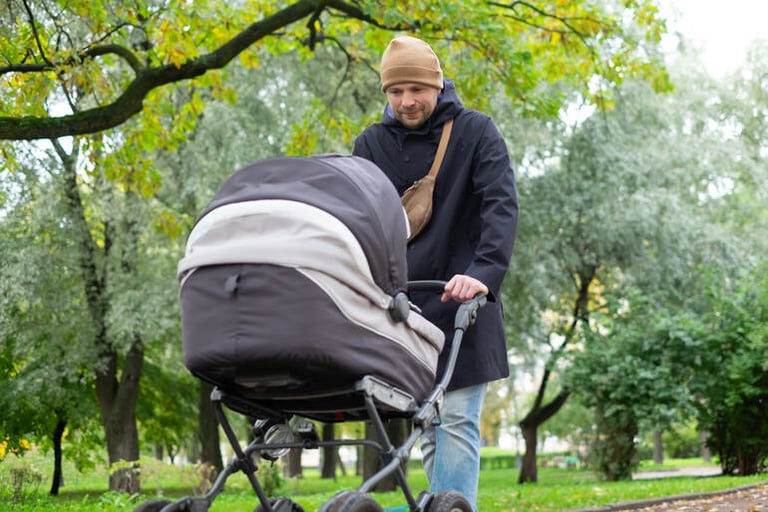
The effect is visible. It is common to see men pushing their children in strollers during the week. Fathers accompanying their children to the pediatrician alone surprise no one. Taking several months off to take care of a child is not a sign of lack of ambition, but of responsibility. This changes the perception of what it means to be “family-oriented.” Abstract statements about wanting to have children one day are not interesting. A concrete ability to handle diapers, school runs, and sick days is.
Legal Framework Behind Involved Fatherhood
The Parental Leave Act of 1995 gives employees the legal right to take parental leave without losing their jobs. Employers must allow it within the framework of the law. Reserved parental days were introduced in stages, first in 1995, expanded in 2002, and expanded again in 2016. These non transferable days ensure that each parent takes active responsibility during a child’s early years. Temporary parental benefit for caring for sick children is regulated within the Social Insurance Code, replacing a portion of income when a parent stays home. Policies like these shape more than family logistics. They quietly influence how people view commitment and partnership long before children enter the picture. In many ways, they echo what the Science of Parenting has shown for years: shared involvement and emotional presence build stronger family systems from the ground up. In the dating space, shared responsibility is not an abstract ideal. It is expected. The idea that both partners step in, adjust work, and protect family time becomes part of how maturity is measured. This affects attraction in subtle ways. Reliability signals long-term thinking. Emotional presence is shown by being willing to take time off to meet the family. To most singles, all these are indications of stability and future preparedness, which is important when dating goes beyond the superficial chemistry to something more permanent.


Comments 0
No Readers' Pick yet.