








What is a Mentalist? Learn Mind Reading and Magic

 Story by:
Editorial Dept.
Story by:
Editorial Dept.
Mentalism is not mind reading. It just looks like it. Instead, what you are watching is a controlled mix of human psychology, observation, and showmanship. A mentalist studies how people think, then uses that knowledge to create the illusion of reading minds or predicting choices. This article will let you know how it works, what mentalism is, and what mentalists actually do.
What is a Mentalist?
In essence, a mentalist is a performer who uses psychological techniques, suggestion, misdirection, keen observation, and a host of other principles to create the illusion of mind reading, telepathy, and other psychic abilities. While a magician focuses on the illusion of a visually stunning effect, a mentalist aims to cause the illusion of an interaction with thoughts, predictions, and human behavior.
In many ways, a mentalist appears to have powers and abilities beyond those of mere mortals. While this may be true to some extent, the art of mentalism is built on knowledge of psychology, memory, cold reading, body language, and many other subjects. In its own way, it’s an art of performance like magic, but it’s not based on paranormal ability.
A mentalist typically performs a prediction, influences the audience to make choices, performs cold readings, and reveals information about the participant that no one else could possibly know through suggestion, observation and more. A mentalism show is more cerebral, mysterious, and interactive than a typical trickery or magic show.
A Brief History of Mentalism
Mentalism is an ancient art. Ancient shamans and oracles often utilized tactics similar to those modern mentalists utilize to exhibit divine inspiration. In the late 19th and early 20th centuries, mentalism became a notable entertainment spectacle, featuring some early mentalist stage performers such as Alexander the Man Who Knows and Joseph Dunninger, who impressed audiences with their mentalism displays.
These early mentalist performers rewired the expectations of followers and audience members through charisma and impressive displays of misdirection and sleight of mind. They took what used to sit alongside traditional magicians and gave it new weight, pulling in elements of psychology and even spiritualism. The goal was not just deception, but real astonishment.
Now, this style is everywhere: viral videos, live shows, and primetime TV. People click to see examples because there is still real intrigue in watching someone mess with your head and make it look effortless. That’s the power of modern mentalism; it surprises you without needing smoke or mirrors.
What Happens in a Mentalist Show?
People often misunderstand what these shows are really about. They’re live performances built on thought-based illusions, reading behavior, predicting decisions, and guiding choices without the audience ever catching on.
Here’s what separates them from standard magic acts: no flashy props, no over-the-top staging, no “magician’s assistant.” It’s just sharp observation, conversation, and real interaction between performer and audience. It feels personal because it is.
Some elements you might experience while attending a mentalism show include:
- Mind-Reading: The performer appears to have read the thoughts of audience members to reveal numbers, names, or images that they were merely thinking of.
- Predictions: The mentalist will predict their audience members’ choices before they have made them.
- Psychological Forcing: The performer will influence their participants by a sequence of subtle, suggestive cues and language to pick from certain words, objects, or actions.
- Cold Reading: The mentalist can “read” people before they ever meet them via a series of general observations, slanted questions, and subtle cues.
- Memory Demonstration: Unusual memory feats will be shown using memorization techniques and other methodologies.
These shows are crafted for suspense and wonder, often making audiences question what’s real and what’s illusion.
How Do Mentalists “Read Minds?”
Mentalists aren’t actually reading minds in the supernatural way you might believe. What mentalists accomplish is much more remarkable because it’s real. Mentalists are experts at observation, suggestion, and psychology. They engage in a range of methods that are recognizably subtle but seemingly powerful to create an authentic illusion of reading minds.
Let’s break down some of the most frequently used ways mentalists reveal astonishing mind-reading feats:
1. Cold Reading: Making Empirical Guesses That Responsively Resonate as Personal
Cold reading is perhaps the most foundational weapon in a mentalist’s arsenal. Cold reading consists of gathering information on a person in real time through their physical appearance, body language, speech patterns, and emotional reactions. This information is then processed into what could be construed as psychic insight.
For instance, a mentalist could perhaps begin by delivering an emotionally charged yet vague statement such as, “I’m sensing someone important in your life with a name starting with the letter J”. The letter J is statistically common (think: John, James, Jane, Jennifer), and someone in the audience is almost certainly going to react. From the moment of a nonverbal cue, such as a glimmer of recognition or nod of grace, the mentalist is watching carefully, and from there, can build on the conversation.
Cold reading is similar to a dance of the mind. The subject doesn’t even realize they’re feeding the mentalist clues, and the performer deftly suggests a line of investigation that results in “insights” that feel incredibly personal.
2. Hot Reading: Using Pre-Gathered Information to Enhance the Illusion
While cold reading occurs spontaneously, hot reading is based on information the mentalist obtains beforehand. Hot reading may be based on social media or public records one has searched, or simply something they overheard in the waiting area before the performance.
In some stage shows, behind-the-scenes assistants will engage with audience members socially, collecting personal details before the performance, and each will eventually communicate information to the mentalist through earpieces or coded phrases. Then, during the performance, the mentalist will “reveal” the same information to the participant. The participant generates the impression that the mentalist is reading their mind and accessing knowledge hidden even from the participant.
3. Forcing: The Illusion of Free Will
A psychological “force” is among the most mind-blowing tools in a mentalist’s toolbox. This “forcing” is a technique meant to subtly prompt a participant to make a specific choice (number, word, card, object, etc.) while simultaneously convincing them that it was a decision made entirely free of influence.
Forcing can be physical, like manipulating cards so one stands out during a face-to-face interaction. It can also be verbal (where a color name or number is casually slipped into conversation) or visual (where attention is drawn to an object through lighting or a simple, subtle gesture). The participant, in each case, feels that their choice was random and free rather than predetermined.
Forcing is all about creating the illusion of autonomy, while the mentalist actually controls every aspect for the entirety of the interaction. Ultimately, forcing is a demonstration of psychological thought control cleverly repackaged as entertainment.
4. Muscle Reading: Reading the Subconscious
Muscle reading or “ideomotor response detection” is an intuitive technique that relies on the mentalist utilizing subtle involuntary movements in their physical actions to help guide the rest of the performance.
For example, if a mentalist asks a participant to think of a place in the room where they have hidden an object, the mentalist could hold onto their wrist or hand and slowly walk around the room. If the participant is distracted, they may feel everything feels normal, but their body is giving off very slight clues that the mentalist will detect and respond to, like slight differences in tension or micro movements as the mentalist gets closer and closer to the location of the hidden object.
Muscle reading enables mentalists to “divine” answers that the participant has not spoken about to the performer. Thus, the mentalist appears to tap into the subconscious, catching what the body shows before the mind registers it.
5. Advanced Memory and Pattern Recognition: Thinking Fast
Mentalists are usually proficient at pattern recognition and fast learners that employ memory tools that showcase their skills. They learn and practice mnemonic systems and “chunking,” which allows them to recall lists of items, sequences of things, names, faces, etc., with ease.
One key to many routines is that the mentalist is able to memorize a sequence of items (e.g., cards, numbers, or facts) and, at some point in the performance, they make that rote memorization look miraculous and magical. And when they reveal the location of the selected object or disclose a detail they mentioned previously, while the audience believes the performer “divined” the information, instead they simply remembered it in thanks to an organized, structured system.
At times, this capability to think quickly and then retain and process information in the moment lends itself to the perception of mind-reading. It’s not magic, though; it’s discipline that is developed and mastered through practice.
All of these techniques (or cold reading, forcing, or advanced memory) are only as good as the performer using them. Mentalists rely on a lot of time, space, and presence. They control the story, set expectations, and provide the audience an experience that feels extraordinary.
The real power of mentalism isn’t in the technique; it’s in the mystery. And that’s why the practice is so memorable.
Psychological Principles behind Mentalism
Mentalists use psychological principles. What appears to be mind reading is really a combination of observation, suggestion, and clever thinking. Mentalists study how people think, react, and make decisions, and use that information to put on show-stopping performances that feel like real psychic abilities.
Here are the main psychological principles used by modern mentalists:
Suggestion: Gently Guiding Thoughts
Suggestion occurs when the mentalist uses words, tone, or body language to lead someone to a specific thought or choice unnoticed by the participant.
For example, by reiterating a specific word or idea during conversation, the mentalist is increasing the likelihood of the word or thought being called to mind at a later time. It will seem like your own thought, but it was actually seeded earlier, a kind of psychological manipulation.
Priming: Preparing the Mind
Priming works because the brain fills in gaps without asking for permission. A performer drops subtle cues, maybe a color, a number, or a word, early on. Later, when the audience member is tasked with making a “random” choice, it lines up perfectly with the subtle cue that was made earlier. That is not random chance. It’s priming.
What looks like free will is often shaped by suggestion, visual illusions, and how the brain handles information. Spiritualists used the same tactics to sell the idea of hidden knowledge. Now, it’s a form of entertainment still built on the same core idea, steering thoughts without making it obvious.
When done well, it feels like someone has extraordinary mental abilities. But really, it’s about understanding the mysteries of the mind and applying them with accuracy. You’ll find these same methods used by all talented mentalists, as they push the same buttons in different ways by gently influencing your thinking without you noticing.
Anchoring: Setting a Starting Point
Anchoring occurs as the first thing you hear has an influence over your subsequent thinking. Mentalists use this in ways that shape your expectations.
For example, if the mentalist presents a very high number to start, you are naturally more inclined to choose a higher number next, even though it feels completely like your own thought.
Observation: Looking for Cues
Mentalists are very good at identifying cues or signals such as eye movement, postures, breathing, and facial expressions. These are very subtle ways of signaling, and they can provide insight into the observer’s thought process or feelings during the act.
One raised eyebrow or quick glance might provide a cue that can provide more details than ever thought possible. Mentalists will read those cues to help inform their presentations.
Finding Patterns: Exploring Our Style of Thinking
Humans are inherently drawn to patterns; we strive to grasp meaning from everything around us. Mentalists exploit this human instinct for meaning and use it to create routines that appear random, but are, in fact, created and cultivated.
When you experience a result that is consistent with your expectation, your brain fills in the gaps, creating amazement. It’s all based on how we perceive things cognitively.
Mental Shortcuts and Biases
Humans are predisposed to use mental shortcuts, called biases and heuristics, to make decisions quickly. Mentalists understand how these function and use them to create the illusion of clairvoyance for the purpose of predicting behaviors.
Examples of biases and heuristics include:
- Confirmation bias: You tend to notice things that confirm what you already believe.
- Availability bias: You tend to select from what comes to mind most readily.
- Social proof: You tend to go along with what others are doing.
By understanding and manipulating these subconscious cognitive habits, a mentalist can create the illusion of free choice. In fact, your decision has already been gently steered in a particular direction.
Mentalism is not about reading minds; it’s about reading people. Mentalists use psychology to predict your thoughts, direct your decisions, and delight you in a number of ways that seem impossible. The mentalist’s secret is not magic but rather an understanding of the intricate workings of the human mind.
Famous Mentalists and Performers
 Derren Brown
 The Amazing Kreskin
 Banachek
 Lior Suchard
 Max Maven




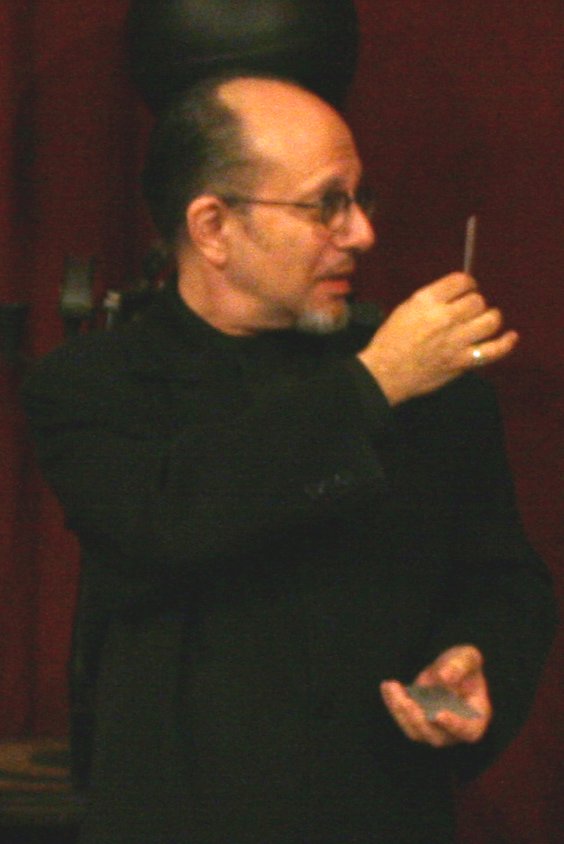
The art of mentalism has been shaped by many iconic performers. Here are some names worth knowing:
- Derren Brown: British illusionist and psychological illusionist famous for combining hypnosis, suggestion, and mind games.
- The Amazing Kreskin: Known for making accurate predictions and mind reading on TV.
- Banachek: A pioneer in mentalism who has worked with major illusionists and debunked psychic frauds.
- Lior Suchard: An Israeli mentalist who has performed on global stages, including for celebrities and heads of state.
- Max Maven: A cerebral performer known for mental magic and a scholarly approach to the art.
These mentalists have helped elevate the genre from parlor tricks to respected performance art.
Can Anyone Become a Mentalist?
Absolutely yes! While it takes time, dedication, and lots of practice, mentalism is a highly learnable skill. Many performers start by studying psychology, magic principles, and memory training. Others practice techniques like cold reading and body language interpretation.
Key traits for aspiring mentalists include:
- Strong observational skills
- Excellent communication abilities
- Stage presence and charisma
- Knowledge of human psychology
- Dedication to ethical performance
Resources like books, online courses, and tutorials can teach the fundamentals. Mentorship and live practice are also vital for mastering the art.
Mentalist Tricks: How They Work
Mentalist tricks rely on a mix of psychology, sleight of hand, observation and wit. Want to learn some of these techniques yourself? Read up about mentalism and mind reading tricks to explore beginner friendly methods that impress and mystify everyone.
From card predictions, precognition, and the illusion of mind control via scientific psychological forces, understanding the mechanics enhances your appreciation and might inspire your own journey into the mysterious and fascinating world of mentalism.
The Power of Perception
Ultimately, a mentalist is a master of perception. They use psychology, suggestion, and misdirection to create moments that feel impossible but are grounded in skill rather than innate psychic powers.
Mentalism works because the mind is easy to influence if you know how. It’s not about magic. It’s about knowing what people will think before they think it. Whether you are watching or performing, it all comes down to control, timing, and attention to detail.

Comments 0
No Readers' Pick yet.