



A Guy’s Guide to Functional Mushrooms for His Dog
 Story by:
Pets Blog
Story by:
Pets Blog
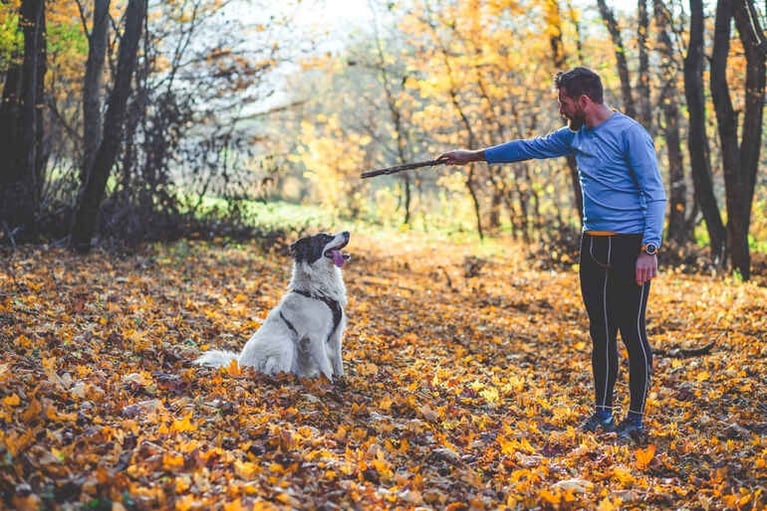
My dog Moose turned eleven in March and started sleeping through the front doorbell. My dog used to bark at delivery trucks as if they were diving bombs when they would drive by. Such moments can turn into the funny, day-to-day tale that couples put in their journals on a date to read, and the birth of something real to laugh about that could make conversation more than just small talk. Three vet visits later, all the bloodwork was clear, and my vet used the line I now hear from all the guys over 40 who have older dogs: “He’s just getting older.
So I did just like you do with all of my things from bourbon to fishing reels. I fell into the rabbit hole, and I emerged with a shelf full of mushroom tinctures, 50% of which tasted like dirt and were ineffective. The other half changed Moose’s daily routine. This is where to begin if your dog is getting older and you’re gazing at powder pouches, looking at which ones are relevant: begin with the label, then begin with turkey tail mushrooms for dogs, because it has the longest track record of any mushroom sold for pets. Here’s the framework I landed on.
Why Mushrooms Work Differently for Dogs
Mushrooms are NOT a drug. They have a long history of use, and the compounds they contain (primarily beta-glucans) have been studied in human beings for decades before they became available for pets. Dogs have a similar immune architecture to us. So, this is the very reason why this category is created. This is where they get it wrong. It’s not like glucosamine, which you take, and your joint tissue is provided with raw material to rebuild. It’s more of an exercise for the immune system. The change is not noticeable within 1 week. You notice it over a season; it’s in small moments, like your dog still bends his head down to the floor when you come in the door again instead of lifting.
I have seen Moose turn down two of the six mushrooms I have offered, due to the taste. Despite the fact that most of the research on turkeys concerns humans, it turns out the gills of turkey tail are quite high in a form of beta-glucan called PSK, which is featured all over the place in human research on immune support. Your dog doesn’t know that. He is aware that the tincture has an odd smell.
What Turkey Tail Actually Has Going for It
Concrete reasons it’s the first mushroom I’d hand a friend:
- It grows on every fallen log in North America, so supply is stable, and prices stay sane
- It’s been used in traditional Chinese medicine for centuries, which means centuries of watching what happens next
- The beta-glucan content is high enough that third-party labs can verify it, unlike some trendy species
Point two is the one I care about. Modern supplements have a marketing problem, which is that anyone with a website can claim anything. Turkey tail’s reputation predates the internet, and you can’t buy that kind of history.
Reading a Label Without Getting Played
Most bottles are a wall of adjectives. Ignore the adjectives. Look for three things.
Extraction method. Dry mushroom powder is just ground fungus. Tinctures are liquid extracts, and the good ones are dual-extracted, which means the maker used both water and alcohol to pull out different compounds. Water grabs the beta-glucans. Alcohol grabs the triterpenes. A one-method product is leaving half the jar on the table.
Beta-glucan percentage. Any serious maker tests for this. If a bottle lists beta-glucan content and backs it with a certificate, that’s a maker who expects you to ask.
Third-party testing. Heavy metals accumulate in mushrooms because they pull minerals out of whatever they grow on. A responsible seller tests every batch. According to the Pet Food Institute, pet supplement oversight is lighter than what you’d expect for products humans consume, so the testing burden lands on the maker, and on you for checking. That’s a boring answer. It’s also the truth.
The Four Questions I Ask Any Brand
I’ve emailed four supplement companies in the last two years. Two answered. One answered with lab reports attached.
- Where are your mushrooms grown or harvested, and on what substrate?
- Do you test the finished extract for heavy metals, and can I see the report?
- What’s your beta-glucan percentage?
- What’s your dosing recommendation by dog weight?
If a company ducks question two, close the tab. Plenty of honest makers exist, and the FDA plainly notes that supplements aren’t held to the same premarket approval standards as drugs, which is exactly why the report request carries weight. Anyone operating in the pet space should be able to answer question four without pointing you to a generic chart.
Dosing Without the Guesswork
New mushroom owners get to be really creative in this area, and that’s not the kind of creativity that you want. Use the lowest dosage recommended by the manufacturer and keep this level for one week and observe your dog’s tummy. Mushrooms are fiber-rich. Some dogs go through it quickly; others have diarrhea for 3 days. If you have someone you are dating or sharing duties of pet care with, it is important to keep in mind these little modifications, too, as they can make day-to-day life easier to discuss and manage together.
If the suggested dose is 150 mg per day, then I give Moose 1/4 of that at first, then increase the amount by a quarter every five days. By the time I’ve had my coffee, he’s already consumed breakfast, his turkey tail in a spoonful of plain yogurt, and then he’s finished. The only reason that I fall back on the liquid tinctures is that they are much easier to add to food than powders are. This is the bit I would want anybody to say to me right at the beginning. Gradually increase the dosage, as you adjust a carburetor isn’t a whole bottle on, suddenly.
The Honest Limits
I don’t have a keyboard; I’m a guy. This is by no means a substitute for a physical examination from your veterinarian. If you have a health condition, are on medication, or you are taking your dog to surgery, you do not discuss it with a blog post; you discuss it with a professional who has examined your particular dog. I would also beg to differ on the notion that mushrooms cure it all. Surgery is required for a dog with a torn ligament. If a dog has a thyroid issue they must be diagnosed. Turkey tail is in the food support section, along with omega-3s and good kibble, and I feel it’s a good addition. But it’s support. It’s not the ceiling you try to reach but rather the floor you stand on.
What surprised me over the last year is how much attitude shifts. Moose asks for the leash again around five o’clock. He barks at the mail carrier, which my wife now considers a feature. None of that is proof of anything. It’s just the texture of a dog who seems more like himself. If your dog is slowing down and you’ve already ruled out the scary stuff with your vet, pick one mushroom, buy from a maker who answers questions, and give it three months before you judge it. That’s the whole playbook. The rest is marketing. For couples who share a dog, taking that approach can also turn pet care into a small but meaningful part of building a routine together.


Comments 0
No Readers' Pick yet.