








Do Knee Light Therapy Devices Actually Work? What Men Should Know Before Buying
 Story by:
Health and Wellness Blog
Story by:
Health and Wellness Blog
There have been no improvements in the problem of knee pain for several weeks already. Perhaps the injury occurred during the basketball game on a weekend, or it can be a result of getting older. The usual treatment that I apply, such as applying ice to the affected area in case of swelling, applying heat to the injured joint in case of stiffness, and perhaps excessive intake of ibuprofen, has been ineffective. Nonetheless, there is pain when going up the stairs and getting up from the desk.
The knee pain does not seem to stop with the physical activities. It could influence your self-confidence and activity level, particularly during social events and dating through online apps. This means that plans could be put on hold, energy could drop, and dating activities could become an extra burden instead of fun. This is why red light therapy gadgets promising relief from knee pain with the use of LED lights catch your eye. You may be skeptical about this option at first, but when pain interferes with your regular schedule and dating activities, it is only normal that you consider something you previously dismissed.
The Deal With Red Light Therapy
It is crucial to begin by discussing why it is important. In today’s time, individuals are becoming proactive towards reducing any pain that they experience rather than simply letting it worsen. Such an aspect can be seen at any stage of life, even if it be from youth to adulthood, where being mobile plays an integral part in their day-to-day existence, and even when it comes to dating online. There’s also a connection between good health and confidence. Ease of mobility translates to body posture, energy, and attitude. This can translate to better social interactions and an overall easier, less-stressed state of mind during dating. It’s not about being perfect but taking out the obstacles. Another factor is convenience. People are seeking simpler solutions that can be incorporated into their lifestyle.
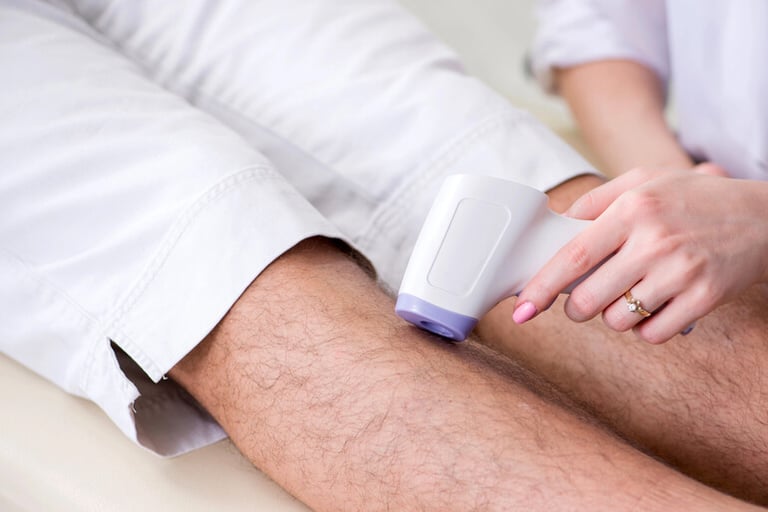
Home-based devices are attractive for people who want to be consistent with their treatment but don’t want to make it a major part of their lives, particularly those who have work, social life, and romantic relationships. What are these things all about? They have very specific red and near-infrared light frequencies that are applied to your knee. It’s not shining a torch on your leg, because it’s very specific wavelengths of light that can penetrate your skin to get to the inner tissues. It’s believed that when your cells soak up this light, it supercharges their ability to produce energy. In the cells, there are these little batteries called mitochondria, and it turns out that some wavelengths of light will supposedly charge them up.
Cybernews, the largest cybersecurity news website, had its team investigate knee light therapy devices and found that while the technology is backed up by science, there are a lot of different quality devices on the market. The study found people can experience pain relief and improve their mobility while using devices like this, but with a catch – you won’t feel better overnight. The average person needs to use them daily for several weeks before they feel their knee is any better. And that’s the key to remember – especially if you have a busy social life. Eventually, we feel more comfortable, so we can be more confident at social events, and online dating can be less painful.
What Knee Problems Might Get Better
Fortunately, if dealing with arthritis, there is something that can help you out. Many studies suggest that when males suffer from knee arthritis, they experience reduced stiffness and can move easily by undergoing red light therapy regularly. It will not be able to treat arthritis, but definitely improve your daily activities. Got a sports injury? Red light therapy might help there, too. Even if it’s runner’s knee from logging too many miles or you tweaked something playing pickup football, these devices could potentially help you bounce back faster. The nice thing is that, unlike some treatments, you can keep working out while using light therapy.
What Research Shows
The research conducted on the matter is quite promising; however, it is not flawless. Several clinical trials discovered that individuals who used red light therapy experienced less discomfort and better knee function than the control group. However, the problem was that it took many weeks for the effects to become visible, and the treatment proved effective only in combination with other wise choices such as proper exercising and avoiding unnecessary activity. One should not expect too much from red light therapy. The individuals who appear to gain the most from this technique are those who combine its application with other activities aimed at maintaining healthy knees.
Shopping Smart
When checking out these devices, don’t be swayed by marketing hype – the wavelength is what counts. You need a device that produces the correct wavelengths – 660-700 nanometers (nm) for red light and 700-1000nm for near-infrared. Cheap imitators can miss the mark, which can impact effectiveness and long-term use. Power density is another consideration. Increased power can reduce treatment time, but it can be too intense for some. The size of the treatment area matters, too.
Large panels treat the entire knee; smaller devices must be repositioned for each part of the knee, which may be regarded as less practical in a busy life. Lifestyle comes into play in decision-making. One could be in need of something portable enough to take to the gym, whereas others could settle for one that needs to be plugged in. This is relevant for people with busy schedules involving work, the gym, and even dating. Although red light therapy should never be seen as an alternative to medical attention for serious knee problems, there is research showing it helps relieve discomfort and swelling.
The key to success with this approach lies in having a healthy routine where regularity, realistic expectations, and other components of a lifestyle conducive to movement will be incorporated. Such a practice may have an influence on one’s level of confidence that would extend to their dating life. For others, having peace of mind due to the physical relief helps them overcome many social obstacles. Instead of just focusing on the device itself, individuals start thinking more in terms of a bigger health strategy in which dating is just one component.


Comments 0
No Readers' Pick yet.