







How To Stay Awake While Driving: Safer Alertness Tips for Rideshare Drivers
 Story by:
Automotives Blog
Story by:
Automotives Blog
Being a rideshare driver also has its own type of tiredness that can come in stages and randomly, so it’s a harder grind to take than you would originally think. There’s a reason that road fatigue is a topic that’s being closely investigated by researchers and safety experts. It isn’t simply about how long you have been driving, but also how well you slept, when it is best for you to start driving, or what kind of day you had the day before you drove.
This guide covers:
- Identify the signs of fatigue and get a rest break.
- The research on caffeine and driver alertness, as well as L-theanine, or theanine.
- The reason behind why caffeine gums have an advantage over coffee or energy drinks, while behind the wheel.
- An alertness schedule that can be implemented practically, on a shift-by-shift basis, for rideshare drivers.
Taking long rideshares can sometimes be more taxing than they appear on the surface. A lot of drivers seeking out how to become dazzling during driving fail to realize how quickly several rides can develop into a significantly longer time on the road. Driving can be stress-inducing, even if it is from a tangle of road crowds, late-night drives, airport errands, or erratic work commutes; the strain of the road can build up with time. Fatigue and driver awareness regarding measures for staying alert while on a long trip are critical for drivers working under any type of ride-sharing company (for instance, Uber or Lyft), for long-distance drivers, delivery vehicles, and road trip drivers. A lot of drivers drink sugary drinks or coffee while driving. But now these options are not always consistent on the highway (spills while driving, sugar crashes, different amounts of caffeine consumption, depending on the amount of energy). Sometimes drivers will opt for other methods of staying alert, such as chewing some gum to keep them awake, particularly if they require something portable.
In this context, portable and measured dose caffeine (culture-bev) can be incorporated into driving lifestyles as it provides a more controlled approach to keeping these drivers awake. In fact, some find it by doing a Google search for side effects of Neuro gum, particularly if they are interested in how it differs from caffeine. But understanding that fatigue is a threat, taking breaks, and knowing when to finish your journey will still be very important in road safety, but the perils of caffeine are just one of them. Sometimes dating was a trip and late nights, in addition to being excited to meet new people, it was all the more necessary to stay alert and accountable if on the move. You can’t replace good sleep with gum or a cup of coffee. What does that mean to be unready, and how to be more awake, alert, and in the moment on long drives, date night drives, and other trips that matter?
The Hidden Danger Every Rideshare Driver Faces
Fatigue may not only happen during a single dull phase but can have a direct impact on driving performance. The National Highway Traffic Safety Administration (NHTSA) estimates that drowsy driving is responsible for driving accidents involving approximately 91,000 Americans annually and the loss of approximately $109 billion in economic cost in the United States. Fatigue has been raised by the American Academy of Sleep Medicine (AASM) as an influential issue in rideshare occupations. Even the best drivers are not immune to the effects of fatigue, and for some drivers, the shift doesn’t start from zero.
There may be other reasons for the lack of alertness, such as other work, family obligations, etc., and this context will influence how alertness is expressed in the road environment. Not all of them have definite limits, but some do, like Uber and Lyft, which have limits of, say, 12 hours for Uber, 14 hours for Lyft, for a particular time. Many road safety specialists, however, say that those amounts are too low. The other factors of tiredness are just as important as driving hours; these are the quality of sleep, circadian rhythm, and life load. Fatigue does not only depend upon time, but also on the quality of sleep, circadian rhythm, and overall load of the individual’s life.
Signs to Watch for Before You Get Behind the Wheel
Fatigue does not all of a sudden happen, making it difficult to see the warning signs. All of these are clear indications that a break needs to be taken before continuing the drive:
- Eyelids droop, the person yawns regularly: They are already becoming drowsy! Don’t dismiss the need as unnecessary.
- Drifting from lane, “rumbles”: Good sign of motor control loss. If your car is doing this, your brain isn’t in a position that it completely controls.
- Situational awareness decreases with fatigue, missing exits or turns. Studies show that navigation mistakes that should be automatic are taking place.
- Multiplied difficulty in recalling the last several miles: This is viewed as a sign of altered mental status. Short-term memory and attention are no longer working effectively.
- These little snoozes last for 4 to 5 seconds and are common for people while they are driving at 65 mph (or more). These blanks can last for a long time – sometimes without the driver noticing.
- The answer is: IF YOU SEE ANYONE’S PULL OVER: NO SLEEP DEBT CAN BE REPAID WITH ANY caffeinated product. The only safe advice is to abate, rest, and recoup.
The Science of How to Stay Alert While Driving on Long Shifts
There’s a body of research on how caffeine interacts with driver fatigue, and what it can and can’t do. Here’s what the evidence actually says:
- Caffeine and Driving Performance
Studies evaluating caffeine and fatigue have demonstrated that caffeine has these effects on promoting alertness and cognitive function during sleepy and prolonged waking states. The relationship between caffeine and the drive has been the subject of multiple studies. The use of caffeine in a controlled driving trial condition demonstrated that cautious use led to better lane keeping and fewer performance errors and thus has been seen as a part of a larger wakefulness management strategy, rather than merely a panacea to perform “better”.
- Sustained Alertness
Military research has confirmed that caffeine helps to keep you alert during long-duration flights. In several controlled fatigue experiments, caffeine consumption groups demonstrated significantly longer durations of functional alertness (for a given level of fatigue) than placebo groups. This does not mean that caffeine will combat fatigue, but it may help to extend the duration of good performance in situations where rest won’t be immediately available.
- Caffeine Gum as a Delivery Format
Studies have explored caffeine gum specifically as a format for supporting alertness, noting its likely greater time lag before feeling effects than the more traditional forms of caffeine – drinks and tablets. That makes this an appropriate choice to use for drivers who require something small and easy to carry around while on shift.
- L-theanine: Calm, Focused Energy
Research has shown some improvement in the combination of caffeine and L-theanine in promoting sustained attention and focus, while reducing hyperactivity or overstimulation, compared to the individual components of caffeine alone, making it a positive addition for individuals attempting to focus and concentrate when the tasks are cognitively challenging, such as while driving, where overstimulation or jitteriness is a distraction.
- B-vitamins and Energy Metabolism
B6 and B12 are crucial nutrients required in normal cellular energy metabolism and neurological activities. They don’t provide a stimulation, but they assist common processes associated with consistent mental and physical endurance.
- The Military’s Approach to Alertness Under Fatigue
The military has been studying fatigue management for years, most of them in “real life” settings with real stakes because a loss of alertness would be devastating. Caffeine gum was specifically chosen for this work because it can be presented rapidly in the field without being cold or bulky like traditional energy drinks. The study results have guided civilian fatigue research and have influenced thinking among professionals in challenging occupations as to the use of caffeine as just one component of a comprehensive alertness plan.
- The Caffeine + Nap Combo: Why It Works
According to the CDC, caffeine and a short strategic rest are one of the best treatments for short-term alertness in the face of fatigue. The idea is simple and is designed on the principle that, if the body partially recovers for a few minutes, then caffeine helps to reawaken it to a state of functionality. For rideshare commuters, this combination is often a smarter move during long shifts than relying on either strategy alone. Nevertheless, it’s not a substitute for real sleep, but it’s more effective than either strategy on its own.
Why Gum Works Better Behind the Wheel Than Coffee or Energy Drinks
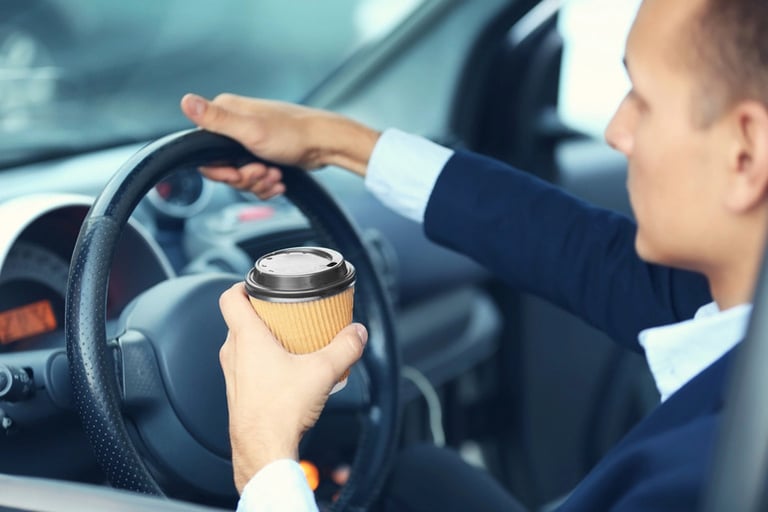
The reason no one can really give me for the way a coffee and an energy drink make the leap in and out of my life every day is that they are the default. They are the default, and that’s why. But both can be unfeasible when it comes to long shifts. Lots of hot coffee are in a moving automotive, and that poses a spill threat. 10 oz. Cans can contain more than one serving of energy drink at a time, contain high levels of sugar, and take up a lot of space! Caffeine pills are clean, but have no added ingredients and need drinking water. Convenience and safety are just as important as staying alert when heading out after a long day/long drive to meet for a date. None of these choices is specifically made to support driving; it is important to think about what solutions are available to help you to focus without adding distractions to your driving.
Functional Caffeine Gum Offers a Different Profile:
- Caffeine dosage per piece (forty or 100mg, respectively, of the 2 formulas), which helps keep caffeine intake under control.
- No genetically modified sugars, as there is a tendency to get an “energy high” followed by a “low” in many energy drinks.
- Takes up no space in a cup holder, glovebox, or pocket, there’s no open container and no temperature worries to consider, and no spill risk.
- Contains L-theanine to help calm and focus the mind, ideal for driving when overstimulated is a problem
With 40mg of natural caffeine, 60mg of L-theanine, and added vitamins B6 and B12, Neuro Energy & Focus Gum supports alertness and energy metabolism. Its sugar-free, portable format makes it ideal for drivers who need measured, reliable mental clarity while on the move.
Quick Reference: Caffeine Per Source
- Coffee: ~96mg per serving
- Red Bull: ~80mg per can
- Neuro Gum (standard): 40mg per piece
- Neuro Gum (extra strength): 100mg per piece
A Rideshare Driver’s Practical Alertness Routine
- First and foremost, there is no supplement, stay awake gum, or caffeine product that can replace sleep. Our medical team does not permit 7–9 hours before a shift, a balanced meal, or hydrated drinking water to be optional. All the others are added on top.
- At the beginning of a turn, most sailors have fairly consistent levels of energy and attention. Certain levels of hydration, short regular breaks during the session, and no heavy food intake can help sustain that baseline for longer before the fatigue management takes over.
- As a shift extends, fatigue management becomes more intentional. Some drivers use moderate, measured caffeine in the middle of a shift, once the initial energy fades, but several hours remain. Products like Neuro Energy & Focus Gum can help some drivers space out caffeine intake more consistently, rather than relying on a single large dose that leads to a later crash.
- In car-to-car situations, some of the habits that are overlooked or forgotten by most drivers and which can make a significant improvement on the mental re-engagement aspect of long road shifts – stepping outside the car for two minutes, stretching, getting fresh air, or walking for a minute or two – can have a significant effect.
- One of the most important points towards the end of the long shift is self-evaluation. A short nap can often be the most effective intervention, rather than yet another piece of chewing gum or another coffee. If a person still feels drowsy after resting and/or drinking coffee, it’s a warning that she or he should not be driving.
- It is good practice to avoid additional stimulation after a long shift (e.g., alcohol, drugs) and relax before sleep to prepare for the following day.
What Rideshare Companies Don’t Tell You About Fatigue
Rideshare services can detect inactivity when you’re driving, but they cannot gauge life depletion. Driving hours are capped for Uber and Lyft, but it shouldn’t take into account jobs done after hours, other work, and the sleeping habits that people follow, as well as financial and psychological issues of the gig economy. But there’s no federal law set during my years recording around the clock or sometimes at the same time in excess of rideshare or other empowerment.
Many drivers log on already carrying fatigue from:
- Doing Overtime or rotating shifts.
- Other full-time or part-time activity on the same day, before the activity identified.
- Lack of good sleep or irregular sleep schedule
- Wage incentives to work for longer hours within the gig economy context.Higher payment for longer work hours in the gig economy.
Fatigue and sleepiness are clear safety issues throughout rideshare work environments, in particular, not from time to time. Incentivizing drivers on the platform with surges and thresholds compounds work pressure and may result in unsafe driving behavior because of fatigue. Nevertheless, you have made your passengers trust you with their safety. This is the same with the other drivers. Recognising your personal limits, knowing when to pull over when it is necessary, and self-managing a shift when it is the right thing to do: There is good fatigue management, which looks like that.
Being well-managed on the road involves having habits that carry you over the transition, better concentration, improved decisions, and consistency that will give you the ability to come back and drive the next day again. Learning how to stay awake on the road safely is part of that process. However, real long-term alertness is built on sustainable practices and not quick fixes. That reliability can be applied to work, as well. When your day-to-day life is packed, it’s essential to take your own health first when you’re trying to juggle it with an active dating life to ensure you have energy for your dating life. From work assignments to banquets, safe driving practices and adequate rest can ensure a well-charged brain and attentive driver reaches each new destination.
Key Takeaways
- Knowing one’s own limits is key to handling shifts of long duration, however: “More won’t help”. Ensuring sufficient sleep, identifying the early signs of tiredness, and stopping at the right time are all ways to help to protect long-shift drivers and others on the road.
- Fatigue: No solution – except sleep. All of the above – caffeine, short breaks, caffeine-nap, etc., should be on top, if that makes any sense; it’s not a replacement. Warning signs from this guide are more prevalent than one might assume for rideshare drivers who often work erratically long shifts and shifts back to back.
- Where caffeine makes sense, they’re often in a measured dose, such as Neuro Energy & Focus Gum, which gives the driver increased control, a known dose, no spill risk, and no sugar crash. Combined with L-theanine, the effect is more sustainable than a big serving of coffee halfway through a shift.
- The most significant call a driver can make is a genuine one: To recognise when the shift is over. You’re entrusted with taking care of your passengers’ safety. But so are all on the road.
The Food and Drug Administration has not reviewed these statements. This product is not intended for diagnosing, treating, curing, or preventing any disease.
Quick Reference: Caffeine Per Source
• Coffee: ~96mg per serving
• Red Bull: ~80mg per can
• Neuro Gum: 40mg per piece
• Extra Strength Gum: 100mg per piece
FAQs
Coffee has long been the go-to choice for staying alert, but it isn’t the only option. Here’s how caffeine gum stacks up against a traditional cup of coffee when quick, convenient alertness support matters most.
How Does Caffeine Gum Compare to Coffee for Alertness Support?
Individual experiences vary based on sleep quality, caffeine tolerance, hydration, and overall health. Research on caffeine gum has explored its role as a fast-support delivery format compared to standard caffeine sources, with some studies suggesting different onset characteristics. As with any caffeine product, effects are not universal and depend on the individual.
Is it Safe to Chew Gum While Driving?
Chewing gum while driving is legal in all U.S. states and is not associated with driving impairment. Some research suggests that chewing gum may support alertness and attention during repetitive tasks, which may be relevant to long highway drives.
How Much Caffeine Should a Rideshare Driver Consume Per Shift?
The FDA recommends that most healthy adults limit total caffeine intake to no more than 400mg per day. Rideshare drivers should factor in all caffeine sources throughout the day, coffee, tea, energy drinks, and caffeine gum, when managing their overall intake.
Can Neuro be Used Alongside Other Caffeinated Products?
Some people do combine Neuro gum and mints with other caffeinated beverages, but total daily caffeine intake should always be monitored. Because each piece contains a measured dose, it’s easier to track your total, which is a practical advantage of measured-dose formats.
Do Neuro Gum and Mints Contain Sugar?
No. Neuro products are sugar-free and sweetened with xylitol, monk fruit, and stevia. This means no sugar crash mid-shift, an advantage over many conventional energy drinks that deliver an initial spike followed by a noticeable energy drop.


Comments 0
No Readers' Pick yet.