








How Often Should You Really Get Interior Pest Control?

 Story by:
Home Improvement and DIY Blog
Story by:
Home Improvement and DIY Blog
Every home has different pest control needs. The U.S. Environmental Protection Agency explains that integrated pest management relies on monitoring. When determining the frequency of interior pest control based on conditions in and around the property, as opposed to an arbitrary calendar, prevention and targeted action must also be considered.
The pest pressure that Collin County homeowners may experience will vary from home to home, so it’s important to care for homes so they remain a comfortable place for you and your family to relax, host friends, or spend time together as a couple. If there’s a recurring problem with indoor pests, it’s wise to include professional interior pest control as part of a general home-maintenance strategy.
How Often Should You Get Interior Pest Control?
Certain houses may require treatment only after pests have been found, and other houses could benefit from professional treatment every few months. Frequency of interior pest control may vary depending on conditions, moisture, entry points, food and food sources, and the pest type.
It is best to search for patterns – if the birds are reported, dead birds, droppings, insect exoskeletons, or damage are seen repeatedly in the same area, it means that one response would not be enough. Controlling the problem is an option and it may be helpful to have a professional review it to determine if active monitoring or treatment is needed.
The four components of Integrated Pest Management (“IPM”) are illustrated below. Pest management requires a strategic approach, prevention, monitoring, and only utilizing control measures when needed. At a moment’s notice, similar to building an expansion team with the right strategy and planning, it can also help keep your home comfortable and inviting, creating a more pleasant setting when you are spending quality time with someone you are dating.
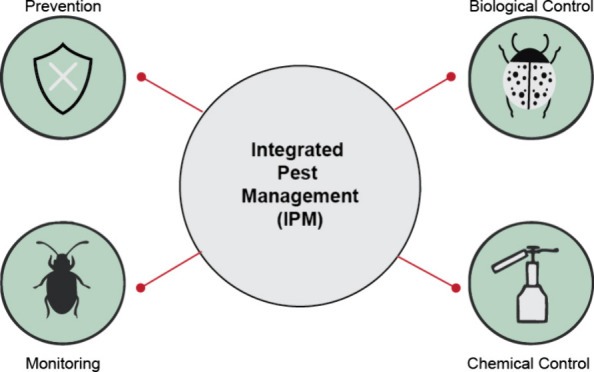
(Source: Integrated Pest Management (IPM) | PMC NIC)
What Factors Determine How Often Interior Pest Control Is Needed?
Several things can impact the frequency of indoor pest control being warranted:
- Pests and pest activity: One (repeat) pest found is not necessarily indicative of repeat pest activity.
- Seasonality: Pests may move their feeding patterns, where they can obtain water, and where they seek refuge due to changes in the weather, such as temperature.
- Property conditions: Loose door or window frames, pipes, vents, or foundation openings can lead to ongoing activity.
- History of infestation: A facility that has had a pest problem over a period of time may require additional surveillance.
- Prevention measures: The procedures that help make it more difficult for pests to survive and thrive, such as good cleanliness, sealing areas around the house, controlling moisture, and proper housing.
When taken together, all these points put together bring homeowners a more comprehensive and more precise perspective than a set schedule provides.
How Can You Reduce the Need for Frequent Interior Pest Control?
Among the steps you can take to deter pests from making themselves at home, eliminating sources that could attract them, such as food, water, shelter, and entry points, can make the house or other structure indoors less desirable. A few household practices that everyone can use will help reduce pesticide use and other pest infrastructure, which will help reduce pest populations that are a recurring problem, leaving more time and energy for productive things in your daily life.
Limit food and moisture sources.
Pests are attracted by very little food; in fact, even food for our animals, open food containers, and a cleanup of food crumbs or spills. Wipe down counters often, store foods in containers in the pantry, tidy up the trash regularly, and only put foods out for the briefest of times.
It’s sometimes water that you need to remember. Some pests are found inside the home when faucets are dripping, cabinets are damp, and there are small plumbing leaks, but a timely repair can remove this source of pests.
Seal common entry points.
Pests usually come in through tiny openings that people might not notice. As part of a year-round guide to keeping your home comfortable, inspect weatherstripping around doors and window screens as well as around gap areas, particularly around pipes and cable openings.
Gated access to the areas may help prevent pests from gaining easy access. It also works to address the actual source of recurring issues rather than managing pests after they have been identified.
Pay attention to hidden areas.
Some of the most useful tests take place in spots homeowners typically don’t observe. Investigate potential dampness, dirt, damage, or presence of insects under sinks, behind appliances, in lower cabinets, and around storage areas.
Maintain a dry, clean, and easy-to-check environment to notice first signs of trouble. Identifying an issue early can prevent a small issue from escalating into a larger, long-term issue.
What Is the Right Pest Control Schedule for Your Home?
The right pest control schedule depends on the level of risk and what you’ve actually seen happening. Homeowners considering pest control at home can look at which pests are showing up, they are observed, how frequently they are coming and going, and even whether it is simple cleaning or care that is making a difference in solving it. It is particularly significant in a TX such as Collin County, where every residence may have a different age, construction, type of garden, and exposure to the sun and weather.
If a house has not repeatedly shown signs, then that house may need checks less often than another house in the same neighborhood that routinely has people moving about inside the house.
Finding the Right Balance for Your Home
A practical pest control schedule should be based on pest activity, home conditions, past problems, and the preventive steps already in place. What is your treatment frequency, and has that been effective for you? Please comment about your experience. We want to know what’s been the most impactful in your home, particularly when you’re trying to make your home comfy and inviting for someone you’re dating.


Comments 0
No Readers' Pick yet.