








The Four Decisions Behind a Man’s Wedding Band
 Story by:
Style and Grooming Blog
Story by:
Style and Grooming Blog
When it comes to their big day, the majority of males get together with their fiancés to choose between the many wedding options in a similar way they approach buying their initial suit: with the feeling that there’s a right and wrong way to do it and that they aren’t sure how anyone gets there. There isn’t a correct answer. If you’re looking for the ring for a relationship that has turned into a lifetime affair, one’s style and preferences are of greater importance than any pre-established formula. You will have four decisions which will reduce the shortlist from thousands of rings to roughly six, once you have made them in the correct order.
Decision One: How Much Presence The Ring Should Have
Presence is the sum of width, profile height, and how much light the surface throws back. A narrow band with a flat profile disappears into the hand within a week of wearing it. A wide, domed, high-polish band announces itself in every photograph and every handshake. Neither is better. What matters is being honest about which one you actually want, because presence is the decision that quietly determines the other three and becomes one of the key men’s decisions when choosing a ring that suits both personal style and everyday life. Independent studios such as Aquamarise tend to publish width in millimeters alongside the profile drawing for exactly this reason: it is the number that predicts even if you will still like the ring in year five.
Decision Two: Metal Tone
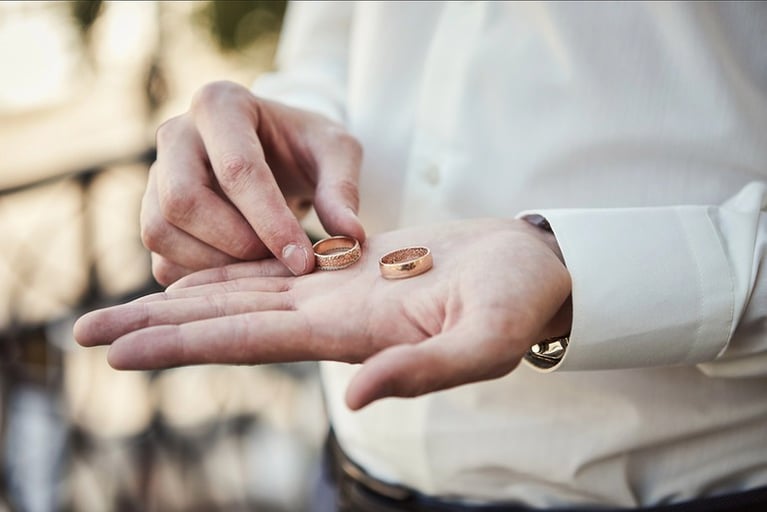
Metal tone is the only decision that is genuinely about your body rather than your taste. Cool tones, sterling silver and white gold among them, sit quietly against most skin. Yellow gold reads warmer and older, in the good sense, and tends to look deliberate rather than default. Rose gold is the one men talk themselves out of and then regret, because it is warm without being loud. The practical test is simple: look at the metal on your watch, your glasses, and your belt buckle. If your ring fights all three every day, you will notice.
Decision Three: Surface Finish
Finish is where a band stops being generic. Polished surfaces are formal and reflective and show every mark they collect. Brushed and matte finishes read modern and absorb daily contact more gracefully. Hammered surfaces scatter light in a way that hides contact almost entirely, which is why they have become the quiet favorite among men who work with their hands. Satin sits between brushed and polished, with a soft sheen rather than a mirror. Finish is also the cheapest way to change a ring’s whole character without changing anything structural about it.
Decision Four: Even if It Carries A Stone
Twenty years ago the answer for men was almost always no. That has changed. A single flush-set stone, a narrow inlay, or a bezel set into a wide band adds a point of interest without turning the ring into jewelry in the way men worry about. For someone navigating single dating, that same sense of personal style can influence how confidently a man chooses a ring that reflects his taste rather than following an outdated expectation. Factors such as budget and season can also shape the overall choice, especially when deciding how much detail or personality to bring into the design. The question to ask is even if you want the ring to have a focal point or an overall texture. Both work. Wanting both usually produces a ring that reads as busy.
Where The Four Decisions Collide
The decisions are not independent, and this is the part most guides skip. A wide band supports texture and stones well; a narrow one rarely does. High polish plus high width plus a stone is a lot of ring. Hammered plus warm metal plus no stone is a very different but equally complete answer. If your shortlist feels incoherent, it is usually because two decisions are pulling against each other rather than because any single ring is wrong.
A Sanity Check Worth Running
- The photograph test. Picture the ring in a photo taken from four feet away. Can you see it? Do you want to?
- The Tuesday test. The ring will be worn far more on ordinary weekdays than at the wedding. Judge it accordingly.
- The five-year test. Trends move. Ask even if you are choosing the ring or the moment.
Why Small Makers Make This Easier
Chain retailers organize inventory by material and price, which is the least useful way to sort rings once you know your four answers. Smaller studios tend to organize by design language instead, so a collection of men’s wedding bands from an independent maker often maps more closely to how a man actually chooses: by presence and texture first, by everything else second. That alignment saves more time than any filter.
The Ring You Forget You Are Wearing
Best of all is not a ring you desire. It’s one that you don’t notice for a month, then don’t see for a night as soon as you forget it in the house. Four decisions in mind, not absorbed from a display case or from the corner of one’s eye = that result. If the couple is about to embark on the next stage of their relationship together, there are instances where they’ll want to select an item that will fit the lifestyle of their relationship without screaming too loudly. Choose the options in the order you intend to purchase them to avoid the impression that you didn’t and don’t own these items.


Comments 0
No Readers' Pick yet.