




Ranking Darren Aronofsky’s Movies, From Worst to Best
 Story by:
Chris Guest
Story by:
Chris Guest
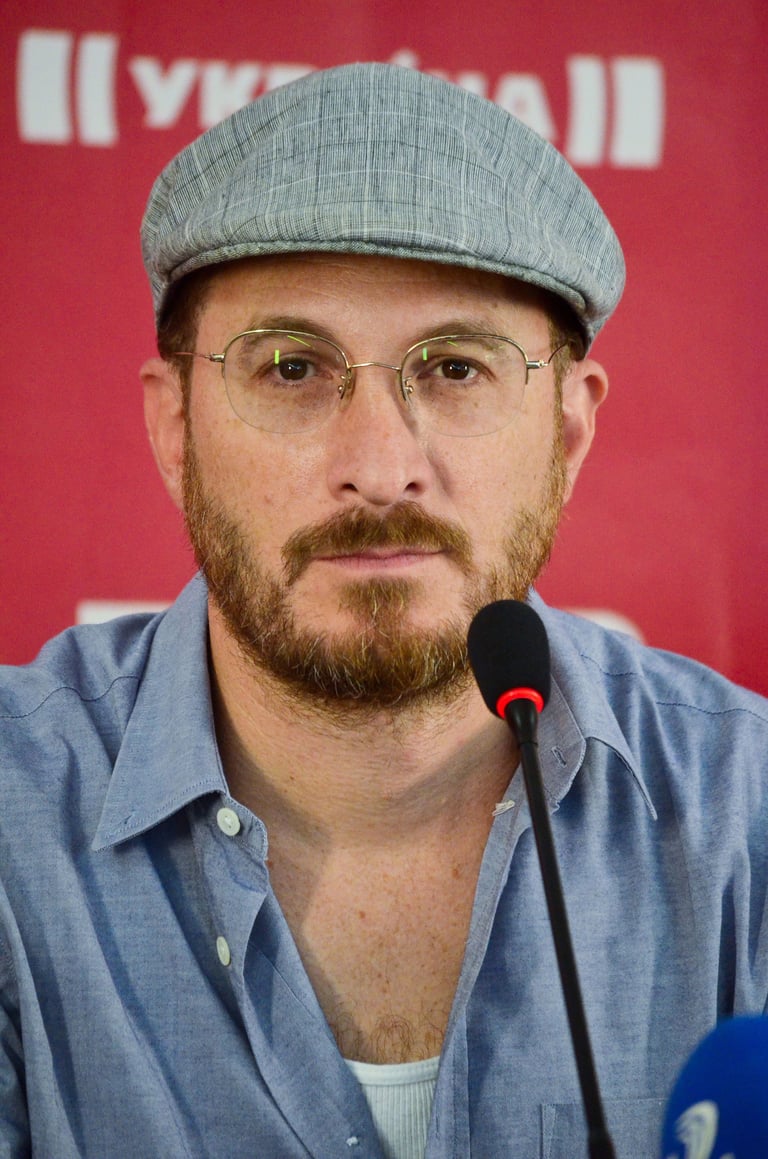
For almost 30 years Darren Aronofsky has been making movies that grab you by the collar and don’t let go. Aronofsky’s films force you to stare at often eminently unpleasant and uncomfortable scenes, letting the hair on your arms prickle at the pain and discomfort etched into every frame. Even when one of his films doesn’t land with critics or audiences, it fails spectacularly, and there usually at least one image that sticks with you for weeks. Yes, there are neater, more consistent filmographies out there, but Aronofsky’s never been interested in playing it safe and covering the same ground artistically from film to film.
Obsession, bodily breakdown, and spiritual panic keep popping up in Aronofsky’s film like blurry motifs in a fever dream, but the forms he works in vary widely: grimy urban nightmares, backstage psychodramas, bruised character studies, cosmic melodramas, biblical spectacles, intimate chamber pieces, and one of the decade’s most polarizing allegories. Some of these movies are genuinely great, while others gloriously overreach. A few are both simultaneously. Let’s dive in.
Want More Film & TV Lists?
Looking for more lists like this one? Check out our ranking of the 21 Best TV Shows of the 21st Century, which also features plenty of unforgettable moments and memorable characters, much like Darren Aronofsky’s filmography.
9. Noah (2014)
2014’s Noah is the oddest kind of compromise: a big-studio swing from a director clearly interested in dragging biblical scripture through the mud, via visceral grief, fanaticism, and eco-apocalypse. There are moments that fascinate for that very reason. Russell Crowe’s Noah isn’t a Sunday-school patriarch; he’s hollowed out, almost like an extremist convinced that he’s been chosen to do divine violence. That gives the film some bite.
The problem with Noah is its scale and tone. It’s too ponderous to move like a proper blockbuster, and too blunt to sit comfortably as a classic Aronofsky psychodrama. In the film’s second half the story slips into family-horror territory, which contains genuinely interesting stuff, but overall, the movie feels more like an admirable artistic endeavor than a wholly compelling film for actual viewers. You can feel Aronofsky wrestling with enormous themes, and you can also see the machinery behind that exploration on screen – grinding the film to a halt.
Most memorable moment: Noah deciding whether to kill the newborn twins.
Best line: “I only choose what is right.” – Noah, a line that turns his faith into something frightening.
- IMDb: 5.8/10
- Metacritic: 68/100
- Rotten Tomatoes Critics: 75%
- Letterboxd: 2.6/5
8. The Fountain (2006)
If any Aronofsky film invites constant arguments that it’s actually his hidden masterpiece, it’s The Fountain from 2006. The movie asks for devotion, and many Aronofsky completionists will tell you that it thoroughly deserves that. The film is earnest to the point of vulnerability, visually rich, and so uninterested in being “cool” that the lack of irony becomes somewhat disarming.
Hugh Jackman and Rachel Weisz surrender to The Fountain’s grand design while Aronofsky crosscuts between mortality drama, historical fantasia, and a dreamlike cosmic reverie as if he’s trying to rewire grief itself. At its best it’s breathtaking, while other times it drifts into mystical abstraction that works more as mood than meaning. Even when it overreaches, though, it feels personal rather than calculated. The Fountain isn’t a failure so much as a film that insists you meet it on its own terms. If you do, it can feel like a singular vision that no other filmmaker could reproduce. If you don’t, it can feel less like a revelation and more like an ornate exercise in cosmic longing.
Most memorable moment: Tom traveling through space in the bubble with the dying tree.
Best line: “Together we will live forever.” – Tom Creo / Tomas, capturing the film’s obsession with love, death, and impossible permanence.
- IMDb: 7.1/10
- Metacritic: 51/100
- Rotten Tomatoes Critics: 51%
- Letterboxd: 3.5/5
7. Caught Stealing (2025)
Caught Stealing is too fresh to have the settled reputation of Aronofsky’s older work, but it already feels like a welcome left turn. Here he’s fully in crime-thriller mode; you still get his familiar currents of desperation, paranoia, and bodily punishment, but the film also snaps with a pulpy, propulsive energy that sets it apart from some of his more solemn projects.
Austin Butler makes a strong anchor as Hank Thompson, a guy who keeps tripping into worse trouble while the movie tightens around him like a noose. Aronofsky has always been adept at escalating a protagonist’s ordeal; in this case he does it with more speed and less metaphysical fog – and with a beautiful cat along for the ride; “careful, he bites.” It isn’t his deepest film, but it’s one of his most immediately watchable.
Most Memorable Moment: The long chase scene with Russ that ends in Detective Roman’s death.
Best Line: “You run away from what you’re afraid of, then it owns you.” – Yvonne, summing up Hank’s whole tragic logic in one line.
- IMDb: 6.8/10
- Metacritic: 65/100
- Rotten Tomatoes Critics: 85%
- Letterboxd: 3.4/5
6. mother! (2017)
mother! is the Aronofsky film most likely to split a room. One person might call it a masterpiece, while another will walk out before the film hits the halfway point. As biblical allegory it’s big, unsubtle, and at times exhausting. As a sensory experience it’s ruthlessly effective, turning domestic space into a surreal panic chamber. Jennifer Lawrence gives one of the most physically committed performances of her career, and Aronofsky stages the home’s invasion with the queasy precision of a nightmare you can’t wake from.
The movie’s ambition is obvious; what holds it back for some viewers is that the symbolism can start to feel like repeated hammering rather than epiphany. Still, when it lands, it lands hard. Few recent films convey the terror of losing control of your home, your body, and the rules of the world with this much conviction. It’s a panic attack embellished with biblical trappings, and, at the very least, it’s never dull.
Most Memorable Moment: The home invasion that escalates into full-on apocalyptic allegory.
Best Line: “You never loved me. You just loved how much I loved you.” – Mother, cutting through symbolism with a raw, direct accusation.
- IMDb: 6.6/10
- Metacritic: 76/100
- Rotten Tomatoes Critics: 68%
- Letterboxd: 3.5/5
5. The Whale (2022)
The Whale is one of Aronofsky’s gentler works, though “gentle” here still means intense — he can’t resist turning guilt, shame, and bodily collapse into something almost ritualistic. Adapted from Samuel D. Hunter’s play, it’s small in scale but emotionally concentrated, resting on Brendan Fraser’s aching, Best Actor Academy Award-winning performance as the 600-pound Charlie, an English teacher trying to reconnect with his estranged daughter before it’s too late. Fraser is outstanding, and the film knows it — sometimes to a fault: The Whale can overplay its cards, and its symbolism often feels clearly underlined.
However, there’s genuine tenderness here too: Charlie’s stubborn faith in other people persists even as the movie keeps testing him. It’s not Aronofsky at his most refined, but it might be one of his most openly compassionate efforts. It wants to hurt you, yes, as any Aronofsky film does, though it also reaches for something resembling healing.
Most Memorable Moment: Charlie rising to his feet and moving toward Ellie in the film’s closing moments.
Best Line: “People are amazing.” – Charlie, offering the film’s clearest note of grace amid the detritus of a painful life.
- IMDb: 7.6/10
- Metacritic: 60/100
- Rotten Tomatoes Critics: 64%
- Letterboxd: 3.7/5
4. Pi (1998)
Pi didn’t just introduce Aronofsky as a stylish director; it announced him as a filmmaker with a distinct point of view. Yes, it’s loaded with showy filmmaking expertise, but they serve something bigger. Shot in stark black-and-white and thrumming with scrappy menace, the movie plunges into the crumbling mind of Max Cohen, a math obsessive hunting for hidden patterns in numbers via the stock market, religion, and maybe reality itself.
You can see the template for the next twenty years of Aronofsky right here: obsession eating its host, knowledge turning toxic, the body cracking under pressure, and a camera that jitters like it’s on its fourth espresso of the day. It’s rougher than his later highs, and that roughness is the spark that helped launched Aronofsky’s status as an auteur. The film feels hungry, feral, and a little dangerous in the best way. It doesn’t just show a man spiraling. It spirals with him, carried by the rare, brazen confidence that can only be found in a debut. I give it 3.14159265 stars.
Most Memorable Moment: Max drills into his own skull.
Best Line: “Restate my assumptions.” – Max Cohen, clinging to this oft-repeated mantra as his mind and worldview come apart.
- IMDb: 7.3/10
- Metacritic: 72/100
- Rotten Tomatoes Critics: 88%
- Letterboxd: 3.7/5
3. The Wrestler (2008)
After the maximalist reach of The Fountain, Aronofsky stripped everything away and made a small yet devastating locker-room tragedy. The Wrestler is the least flashy of his best films, and that restraint is exactly why it hits so hard. Mickey Rourke delivers an Academy Award-nominated, career-redefining turn as Randy “The Ram” Robinson, a washed-up wrestler whose body is failing almost as fast as the myth he clings to.
Aronofsky films him with bruised intimacy, finding dignity in the ritual of performance and heartbreak in the moments when performance is all that he has left. The movie is about damage, but also about the split between Randy the man and Randy “The Ram,” the persona he can still summon, a more battered and broken version of the solitary archetypes in our sigma male movies roundup, even as the rest of his life falls apart. Rourke inhabits that tension completely, and Aronofsky mostly gets out of the way, letting the man walk toward the ropes so you can feel the cost of every step. It’s a beautiful, painful portrait of a body that can no longer cash the checks its soul keeps writing.
Most Memorable Moment: Randy going back out for the final match and climbing the ropes to employ his signature move, the Ram Jam.
Best Line: “The only place I get hurt is out there. The world don’t give a shit about me.” – Randy “The Ram” Robinson, a bruised confession that sums up the film.
- IMDb: 7.9/10
- Metacritic: 80/100
- Rotten Tomatoes Critics: 99%
- Letterboxd: 4.1/5
2. Black Swan (2010)
Black Swan is where Aronofsky’s obsessions and subject matter clicked into something dangerously precise. The body-horror touches, mirrored identities, perfectionism turned self-destructive, performance-as-possession, kaleidoscopic hallucinations, erotic menace and psychological fragmentation all feel intrinsic to the film’s very DNA, not just tacked on tropes. Natalie Portman is extraordinary as Nina Sayers in a Best Actress Academy Award-winning role, turning her performance—and the film at large—into a slow-burning combustion of repression, hunger, fragility, and ambition.
The backstage melodrama is pulp at its best, but Aronofsky films it with such mounting intensity that it becomes operatic horror. Every change Nina undergoes hits hard because the movie understands performance as both liberation and annihilation. She doesn’t simply become the Black Swan; she dissolves into the idea of becoming it, and that dissolution feels terrifying, ecstatic and somehow inevitable. It’s one of the most acute portrayals of artistic self-erasure in recent cinema; ultimately, it turns the film into an undeniably gripping watch and one of Aronofsky’s best features overall.
Most Memorable Moment: Nina’s final performance of “Swan Lake,” especially her transformation into the Black Swan.
Best Line: “I was perfect.” – Nina Sayers, the film’s devastating final note of triumph and self-destruction.
- IMDb: 8.0/10
- Metacritic: 79/100
- Rotten Tomatoes Critics: 85%
- Letterboxd: 4.2/5
1. Requiem for a Dream (2000)
If Black Swan is Aronofsky at his most finely tuned, Requiem for a Dream is him at his most devastating and unforgettable. This is the movie that turned his style into a kind of assault: split screens, rapid hip-hop montages, sound design that feels like a tightening vice, fractured points of view, and brief toxic reveries that read like prophecies of doom. All of it serves a story that simply gets more upsetting and tragic by the minute.
Jared Leto, Jennifer Connelly, and Marlon Wayans give strong, committed performances, but the film really belongs to Ellen Burstyn. Her Sara Goldfarb is the movie’s soul as well as its deepest horror. Her downward spiral isn’t only about drug abuse. Instead, it’s about loneliness, vanity, a hunger for widespread validation from the world at large, and the basic human need to feel “seen.”
People call Requiem punishing, and that’s fair. But that word can undersell just how deliberate it is. Aronofsky isn’t trying to shock at random; he’s conducting a symphony of devastation with a terrifyingly clear formal plan. By the time the final montage hits, the film stops depicting collapse and becomes collapse itself, with each jagged beat landing like a cruel form of resolution for the characters at its center. Lots of films about addiction want to leave you with a warning. Requiem wants to leave a scar.
Most memorable moment: Sara Goldfarb’s electroshock treatment and the merciless final montage.
Best line: “I’m somebody now, Harry.” – Sara Goldfarb, explaining the hollow sense of purpose she has pinned on her TV obsession.
- IMDb: 8.3/10
- Metacritic: 71/100
- Rotten Tomatoes Critics: 79%
- Letterboxd: 4.1/5
Final Thoughts on Darren Aronofsky’s Films
Ranking Aronofsky’s films mostly comes down to which flavor of his excess you prefer: the cosmic sweep of The Fountain, the allegorical fury of mother!, the bruised humanity of The Wrestler, or the nightmarish formal machinery of Requiem for a Dream. For me, the deciding factor is where technique, cruelty, empathy, and forward momentum all collide. Requiem wins that contest, because it’s the film where Darren Aronofsky fully became Darren Aronofsky, with all the brilliance and the damage that implies.
If this ranking sent you back down a rabbit hole of favorite scenes, endings, and performances, our movie trivia questions roundup is another easy place to keep the conversation going.
Header Photo Courtesy Wikimedia Commons/Andriy Mukukha


Comments 0
No Readers' Pick yet.