






We Compared Onboarding on 5 Dating Apps
 Story by:
Dating Blog
Story by:
Dating Blog
The two questions all big dating apps eventually ask prospective users are: what are you looking for, and what does your dating partner look like? The order in which they ask divides the category into two parts, and there is no close relationship between results for each part. That sequence might subtly influence the initial impression, whether it’s how one introduces themselves with plans or the interest they garner in the profile, in the case of those seeking online dating opportunities. It also points out how minor decisions made in the initial part of a dating journey can have an impact on the rest of the date.
This is a breakdown of five real-life onboarding flows, rather than a Top 5 list of the best dating apps sorted by a single parameter – whether the app requires you to preemptively commit to showing them a face or not.
Sorting 5 Apps by One Question: Intent First or Faces First?
Nobody has published this specific comparison before, but it lands right at the intersection design agencies tracking where mobile app development is heading watch most closely. That discussion brings one thing out of the woodwork: An onboarding question’s placement in the sequence is as important as the question itself.
There are five apps on that spectrum. Let’s take a look at how each is able to deal with the order, beginning with the one that has you waiting the longest just to get a single face.
- Raya’s Application Process Vets You Before You See Any Faces
Raya sits at the extreme intent-first end. There’s no swiping until a global committee reviews your application, your job, your social presence, your reason for wanting in. The application openly admits that it takes into account the time that is spent and the people that come into contact with an individual more than the amount of money they possess. After several weeks of screening, faces are in only about 8% of the time, if ever.
Although it is celebrated, it doesn’t call for someone to be famous. What is actually said is: Is your Instagram meant to be read, are your work and creative field apparent, and are you willing to refer to an existing member? Before dismissing the app as unattainable, it’s important to realize that a regular guy with a well-defined and well-curated presence on his social network can have a real shot if only for one referral.
- Feeld Makes You Define Your Desires Before You See a Profile
Feeld doesn’t waste time on small talk before the big stuff. Before the app displays a single actual profile, you are figuring out what you want, who you are, and what type of relationship you’re open to. According to the app’s design write-ups, desires and relationship types get built in as early, core steps, with community guidelines showing up before you ever see a match.
That upfront honesty is the whole point. Let’s say you’re interested in dating as part of a couple, or you’re into non-monogamy, or anything kinkier. Normally that’s a conversation you’d have to work up to, three dates in, hoping it doesn’t blow the whole thing up. On Feeld, it’s already out there. Anyone matching with you has already seen it and decided to stick around anyway.
- Hinge Collects Dating Intent Before Unlocking Full Swiping
Hinge sits in the middle but leans intent-first. Its product documentation describes the flow as collecting dating intent, age range, distance, and preferences first. Only a small set of photos is required before the profile activates and swiping starts. Prompts and voice notes get added on top of that, so a profile ends up saying something before it ever shows a full photo grid.
The app’s own research backs the design choice. Conversations with a voice note attached were 41% more likely to end in a date in 2025, and a comment on your like makes you roughly twice as likely to get a response as a bare like. The app rewards guys who put effort into what they say.
- Bumble’s 15-Step Onboarding Delays Intent Until the Match Stage
Bumble runs a longer, 15-step onboarding. Women had to message first in heterosexual matches. That was the rule, and it kicked in at the matching stage, not at signup. The app then scrapped it in August 2026, letting anyone in a match send the first message, with a 72-hour reply window replacing the old 24-hour one. Profile depth still comes gradually, closer to the middle of the spectrum than the photo-first end, something our own breakdown of Bumble stats covers in more depth.
The rule change matters for anyone who’s avoided the dating app because sitting around waiting for a message felt passive. Bumble’s data already showed messages referencing a specific profile detail get about 30% more replies than generic “hey,” no matter who sends it. The app changed who’s allowed to go first. It didn’t change what makes someone want to write back.
- Tinder Gets You Swiping on Photos in Under Two Minutes
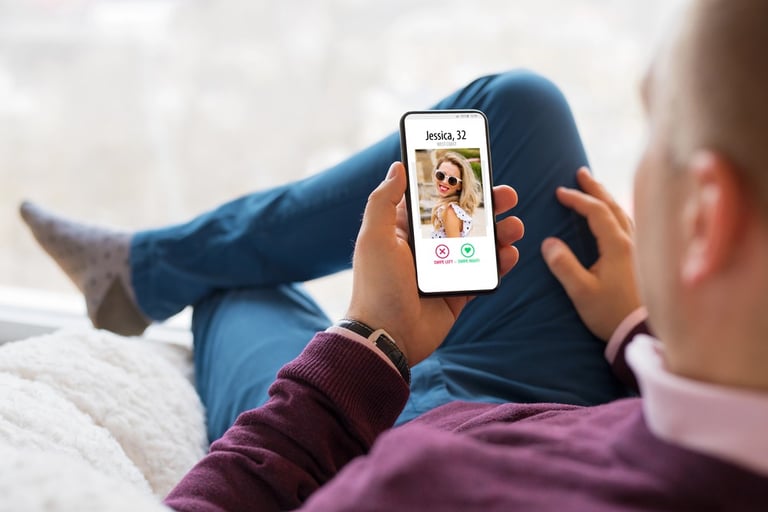
Tinder anchors the photo-first end. The signup takes a few photos and a handful of quick questions, then moves straight into swiping, often in under two minutes from install. Our full rundown of Tinder stats has the numbers behind why it still leads on raw user volume. Intent, if it’s addressed at all, comes later, inside the swipe experience itself, buried in a bio line most guys skip writing entirely.
That skipped bio line is where a guy on Tinder can stand out for free. Almost nobody fills it in with real intent, so even one clear sentence about what you’re looking for sets a profile apart. No app redesign required. Just a sentence most guys never bother to write.
What Happens to an App That Asks Intent First
This is the point where the comparison stops being a design opinion and becomes a falsifiable claim. Revenue growth or decline is a proxy for whether the format works for the people using it, not just for how it looks on a pitch deck. Two very different stories show up in Match Group’s quarterly filings with the SEC, from apps sitting on opposite ends of that spectrum.
The short version:
- Hinge (intent-first): double-digit revenue growth for four straight years, still climbing.
- Tinder (photo-first): losing users for years; nothing tried so far has turned it around.
- Bumble (middle of the pack): flat for the past couple of years, not really growing but not collapsing either.
Hinge’s growth lines up with intent-first design, at least by its own account. The trade-off is more upfront effort in exchange for fewer wasted matches, and that’s worth weighing before you pick an app.
The Part Nobody’s Published
None of these companies split retention by gender and age in their SEC filings. So there’s no real number for how men 18 to 34 stick around on Hinge versus Tinder. And that’s exactly why this teardown had to be built screen by screen, matching real onboarding flows to real company results. That said, something close does exist, from Pew Research. It doesn’t track retention by app, but it does track how men and women experience dating apps differently, which is close enough to be useful here.
A Real Pattern With an Honest Limit
The game is documented in relation to gender; insecure guys struggle with dates from loyalty systems. It hits directly into this section of the funnel that an intent-first flow is designed to help solve. It could describe to a boy his status before he has poured into a face he may not be able to match. This is a correlation of the three attested data points, not a causal sequence.
This kind of sequence within an onboarding indicates that it’s way beyond dating applications. The awkwardness is important: Any product that has to listen to a stranger, and in the correct order, in order to get a bit more trust until it’s trustworthy enough to ask for more will have a similar tradeoff.
What the Onboarding Sort Means If You’re Swiping Right Now
It’s important to designers’ work that’s bigger than that. However, for a guy whose time to spend at the app store is limited, and his spending dollars doubly so, it’s a more helpful filter than app-store ratings. Early dating online can be more effective if you can provide a message that you get before going into the face of a stranger, eradicating wrong intent before a conversation even begins. Not one of you wastes a week of messages trying to figure out that you have different convictions as to what you’re looking for, leaving more room open for connecting on the topics that work.
The photo-first apps aren’t leaving the prose and quickness of the goal in fashion when the focus is on volume and not accuracy. But if this trend continues, the apps with “what do you want” before “here’s a face” get “matches that turn into dates” that lead somewhere. Watch: once you land 1, these conversation starters still do the rest of the work, regardless of which app got you there.


Comments 0
No Readers' Pick yet.