








The Changing Tides Of Commercial Fishing: How An Ancient Industry Became A Global One
 Story by:
Business Blog
Story by:
Business Blog
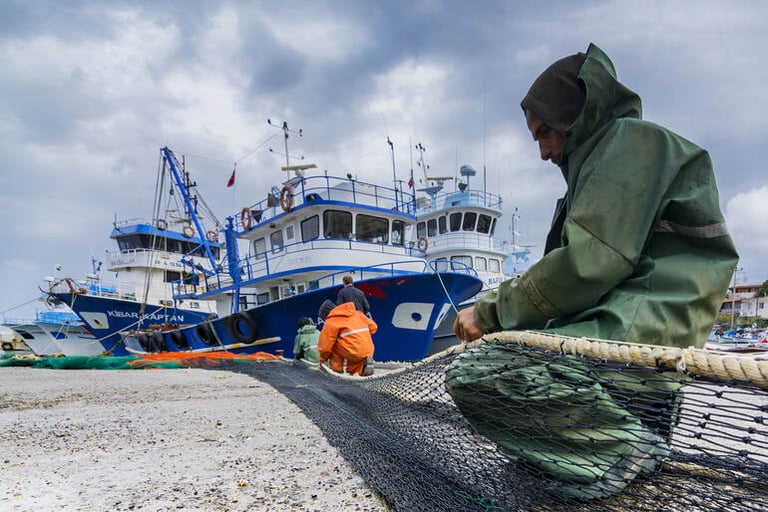
Human beings have been fishing for their meals from time immemorial, but the kind of industrial fishing that occurs nowadays is incomprehensible to the original fishermen. The fishing industry has been revolutionised into one of the biggest commercial industries with a value of several billion dollars due to technology, laws, and the pressure to get more fish in the shortest possible time. Fishing activities have been instrumental in the lives of coastal communities throughout generations and have been part of their social interactions and practices.
Coastal harbours have served as meeting grounds for families who met there and exchanged stories, leading to marriages. The spirit of unity and love still exists, although the current lifestyle has led to different forms of communication. People who interact in industries that involve travelling and moving from one place to another can still be found in the same dating and social circles today. It is time to dig deep into the evolution of the fishing industry.
From Coastal Villages To Industrial Fleets
Until recently, most fisheries were local and served small boats, nets, lines, and traps, with local sales and/or salting the fish for dispatch further away. The communities were close-knit, engaged in close collaboration, and were bound by their shared experience handed down across generations. These social networks, such as friendship, romantic relations, and marriage customs, were very closely woven. Talk about catching fish began long before the dawn of modern dating apps in the dock and marketplaces. Nowadays, the spirit of the coastal community is carried on the internet, and fishing pickup lines are still used by those wanting to engage in conversations or flirtation.
During the Industrial Revolution, a lot of new inventions appeared, such as the steamship, which had a great impact on the reach of the fishermen. For example, steam trawlers enabled higher catch rates and fishing further offshore and deeper than in the past. In the early 1900s, fishing boats would search the North Sea, the North Atlantic, and the Pacific Ocean waters, which would be unheard of a generation before. Likewise, fishing communities experienced their own changes due to the long duration of their fishing trips and the rise of trade among the ports. Fishing communities also experienced transformation due to the long duration of their fishing trips and the rise of the trade between the ports.
How Fishing Gear Has Evolved Over Six Decades
Gear has always been central to fishing, and not just the nets and lines. The clothing and protective equipment worn by commercial fishermen have changed enormously, too. In the mid-20th century, oilskin jackets were standard issue: heavy, stiff, and only marginally effective against sustained exposure to cold water and wind. By the 1960s, manufacturers were beginning to develop purpose-built PVC wet-weather gear that offered far better protection. Few companies can claim to have been part of that shift from the very beginning. Stormline’s 60-year anniversary is a sign of the times.
In 1966, the company started in Invercargill, New Zealand, to cater to fishermen and farmers in some of the toughest conditions around the globe. There’s no margin for mistakes in the Southern Ocean, and the equipment needed to take that into account. Fishing equipment nowadays is made keeping in view the ergonomics and robustness of the product. Bibs, suits, and oilskins have been designed to be worn all day long in wet weather. The quality of material used has seen major changes, while the fit has become an important aspect altogether.
Technology And The Global Catch
Not only did fishing get larger, but it got clever. Developed during the First World War as a response to the submarine threat, sonar and echo-sounding came onto commercial fishing boats in the late 1940s. By the mid-1930s, fishing crews were already using the technology of acoustic detection of fish shoals, and by about 1948, the first purpose-built fish finders were available. Skippers will now have the ability to find shoals by accuracy, rather than by relying on seasonal variations and experience alone.That reliance on technology brought about changes in land life, too, especially for the inhabitants of the coastlines, because they needed to connect even more with a life that was fast-moving.
The sailors and labourers spent a lot of time travelling from one port to another; hence the need to keep connected, which eventually led to the emergence of social customs common with online dating. From then on, GPS, satellite communication, and real weather reports have changed fleet management. Today, the amount of processing power on a modern deep-sea trawler is greater than that of an entire naval fleet 50 years ago. This has enabled fishing to be taken to new areas such as the sub-Antarctic and the deep Pacific. Digital technology has also transformed personal relationships within wider society, as dating applications and online communities have helped make long-distance relationships seem closer than ever before in human history.
Regulation, Sustainability, And The Shift In Priorities
The very same technology that made fishing more effective could also result in the overfishing of fish stocks on a catastrophic scale. By the end of the 20th century, several major fishing areas around the world saw a decline in the number of commercially valuable species of fish, such as cod and tuna. The Grand Banks, where fishers are believed to have walked on the waters before, had been closed in 1992. Initially, it was planned for only two years; however, it turned into a permanent closure of more than 30 years.
Recently, in 2024, the Canadian government allowed limited fishing of cod on the Grand Banks; yet, the catches have decreased significantly, and even doubts remain concerning the readiness of the stock for fishing. The consequences of this crisis caused a serious shift in the attitude toward fishing. Today, much of the world’s catch is under quota and/or marine protected areas and international agreements. Consumers and retailers are increasingly wanting to know how far back the seafood traceability goes, all the way to the ocean – certification schemes such as the Marine Stewardship Council (MSC) have made sustainability a conversation at the top of the agenda.
To appreciate just how much the fishing industry has progressed, these are some of the key statistics:
- The FAO’s latest State of World Fisheries and Aquaculture report shows that total fisheries and aquaculture production in the world hit a new record of 223 million tonnes in 2022.
- Fisheries and aquaculture are estimated to support the livelihoods of around 600 million people globally (including those who work in the fisheries and aquaculture sector and their dependents).
- In 2022, the production of aquatic animals in aquaculture rose for the first time to become the largest share of global aquatic animal production, at 51% and 57% of the total fish produced for human consumption, respectively.
Tides That Continue To Tie In
Without a doubt, commercial fishing has certainly evolved far from where it started as an occupation performed by tiny village communities for their survival. In contrast, today, it is not limited to only coastal regions but has evolved to include cutting-edge technology in the form of factory vessels, satellite tracking systems, and international fishing laws. There is one thing that remains constant despite all these advancements – human labour. The tools used by a fisherman can provide us with insights into how much fishing has transformed, and it reveals a lot about the developments in the field of communication, transport, and even social interaction between people.
Even love-making has found a new face in the fast-paced life of young couples who are away from each other due to their hectic careers. It appears that online dating is becoming increasingly popular among working individuals. Coastal culture has also made its way into the digital realm, from stories to catch the attention of the opposite gender to catchphrases for fishing up girls and funny jokes to share on social media and dating forums.
Regardless of all these changes, commercial fishing continues to involve risk and perseverance just like before. This element of fishing has made it attractive throughout the years, not only to fishermen themselves but also to the outside world.


Comments 0
No Readers' Pick yet.