







How to Host a Casino Night That Doesn’t Feel Cheap or Tacky
 Story by:
Casinos and Gambling Blog
Story by:
Casinos and Gambling Blog
Casino night sounds like a great idea until you start shopping. Five minutes online and you’re looking at plastic gold bars, giant playing cards, and a red carpet that appears to have been cut from a child-size bath towel. Close the tab. When planning a date, a polished photo or flashy presentation can say very little about the experience, so it helps to focus on genuine details that make a connection feel comfortable and worthwhile. None of that is helping. What people actually enjoy is the grown-up version: a handsome room, a game they can understand, a decent drink, and enough time to talk between rounds. The casino part adds a little theater to the night. It shouldn’t make your home look as though a party store lost a bet.
Set the Mood and Then Leave It Alone
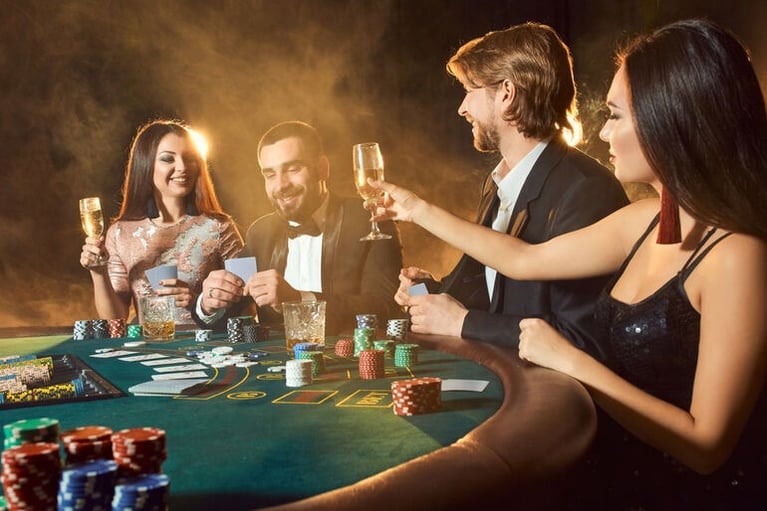
Pick a restrained palette and trust it. Dark green, black, and warm brass will get you there. So will navy, cream, and dark wood if that’s what already suits the room. The point isn’t to reproduce Las Vegas inch for inch; it’s to make an ordinary Friday feel a notch more deliberate. Lighting does most of the work. Kill the bright ceiling fixture, switch on the lamps, and put a few small pools of light around the room. Guests should be able to read the table without feeling as if they’re sitting in an office conference room. Candles are fine on a sideboard. On the game table, where sleeves and chips are moving around, they’re an avoidable adventure. I’d make the dress code ‘cocktail casual’ and leave it at that. It gives a guy an excuse to wear the jacket that spends most of its life in the closet, but nobody has to rent a tux. For music, old soul, instrumental jazz, and low-key electronic tracks all work. Keep the volume below the conversation. This is a party with a soundtrack, not a soundtrack with trapped guests.
One Good Table Beats Four Bad Ones
Hosts tend to overbuild. They imagine roulette in one corner, cards in another, and some elaborate tournament happening near the kitchen. What they usually create is four half-finished stations and nowhere to set down a glass. Make one table feel convincing instead. Clear the dining table completely. Not mostly, completely. Phones, keys, and the bowl that normally holds unopened mail can live elsewhere for one night. Add a fitted felt surface, leave room for elbows, and make sure chairs can slide back without hitting a wall. Drinks belong on nearby tables, not beside the wheel. Roulette is a useful centerpiece because several people can join the same round and newcomers can understand the rhythm quickly. A wheel, a readable layout, and chips in separate colors are enough. The game’s connection with grand rooms goes back a long way: Monaco’s famous casino opened in 1863 and still pairs European roulette with lavish architecture, as is the history of the Casino de Monte-Carlo.
Run one test spin before anyone arrives. You’ll discover practical problems immediately: a lamp reflects off the board, the wheel wobbles, or the person running the game can’t reach the far side without climbing across the table. Fix those now. Nobody remembers clever decor if they spend the night squinting.
Know Enough to Keep Things Moving
Here is the host’s real job: remove awkward pauses. You don’t need a dealer’s vocabulary or a speech about the origins of every chip placement. You do need to know where the obvious choices sit, when a round starts, and when it’s time to clear the table. If roulette is new to you, a few practice rounds are worth doing. Using a digital table to play roulette online beforehand lets you see where common bets sit, how a round closes, and when the result is settled. Watch the sequence until the board no longer resembles an unusually hostile spreadsheet. Focus on the flow. If you can explain red or black, odd or even, and a single-number choice without looking anything up, you have enough to start the room. When guests gather, show one sample round and then let them play. Don’t give a lecture. People retain far more after placing a chip themselves, and the group will naturally help anyone who arrives late. A small reference card beside the wheel is useful; a four-page rulebook is a cry for help.
Design the Night for People Who Wander
No real party unfolds according to the schedule in the host’s head. Somebody will arrive 40 minutes late. Two friends will disappear into a conversation near the kitchen. Another guest will want to watch for a while before joining. Build around short rounds, and all of that becomes easy. All players receive the same starting stack. Make it funny or make it modest for a prize: a bottle, a small award, or first choice of dessert. The punctuation is the prize, not the story. You want to create a room where people start talking to each other, not finding out who’s unbearable over a pile of plastic chips. The real point is to make the setting comfortable enough that people feel at ease and tell stories and have fun with each other. That can also allow for unexpected connections to happen organically in a social environment, allowing for conversations to extend beyond the game itself.”
Choose Food With the Felt in Mind
The ribs are gone. Cheese puffs, powdered donuts, and anything else that leaves a greasy imprint can be seen from across the room. Skewers, sliders, filled mushrooms, flatbread sliced into tiny squares, and sandwiches that won’t spill across a lap are examples of cuisine that requires one hand and no focus. Remove the buffet from the table. That tiny decision saves the felt and gives people a reason to move around. Keep napkins everywhere. Not tasteful little stacks in one distant corner—everywhere! The bar can be short and still feel generous. Twelve dusty bottles and a host who spends the evening looking for a lost mixer don’t cover the room as well as one darker cocktail, one tall and easy highball, and a decent alcohol-free drink. Before the doorbell rings, gather as much as you can. Use glass markers as well. Every coupe resembles every other coupe by ten o’clock at night.
Plan for the 10:15 Slump
Almost every party has a soft patch. The first food has vanished, the initial excitement has cooled, and nobody is ready to go home. It often happens around 10:15, give or take a slow Uber. Don’t panic and don’t announce a complicated new activity. Change the pace for ten minutes. A quick round drawn from our collection of multiple-choice trivia questions works because guests can answer from the sofa, the bar, or wherever they happen to be standing. Make loose teams, ask six or seven questions, and quit while people still want one more. Then read the room. Maybe everyone returns to the wheel. Maybe the music gets louder, and the game is finished. That isn’t the plan failing; it’s the party finding its own shape. Good hosts notice the difference.
What Guests Will Actually Remember
They won’t remember whether the chips matched the napkins. They’ll remember the friend who backed the same number five times, the unexpectedly excellent drink, and the argument over a trivia answer. That is the material a good night is made from. Spend money, if you’re spending it, on good ice, enough seating, and food you’d happily eat the next day. Then stop managing every second. Casino night works best when the theme gives people an excuse to gather and gets out of their way. Keep the wheel. Keep the jacket. Lose the plastic gold bars. Leave enough room for genuine conversation, shared laughs, and the kind of easy interaction that can sometimes turn a casual night out into a memorable social connection.


Comments 0
No Readers' Pick yet.