








Why Voice Chat Ruins More Matches Than It Saves
 Story by:
Video Gaming Blog
Story by:
Video Gaming Blog
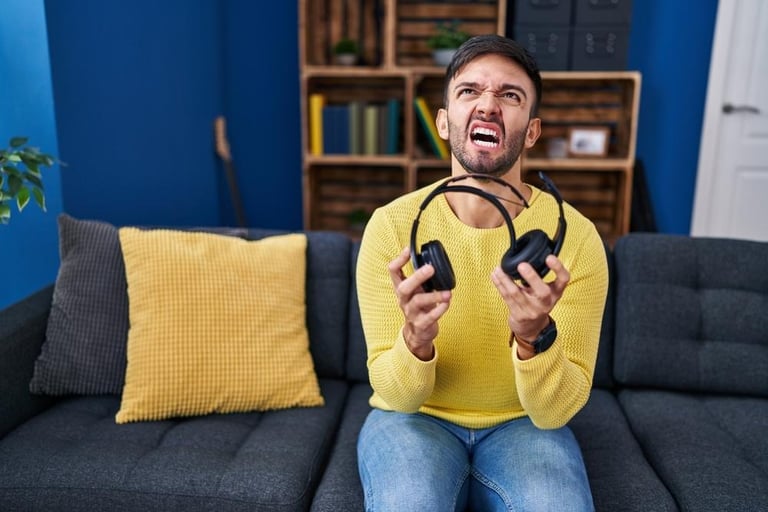
Voice chat is marketed as the core of team chat, and it is the thing that makes five strangers a cooperative team. That’s the one thing that makes five strangers a team,m and the thing that gets marketed as teamwork is a completely interchangeable hub called voice chat. If there’s a callout, the player is awarded the round, so in theory, if nobody spoke, the player who did would win it. In practice, everyone who has signed up to get into a competitive round with an open mic will see that in reality it’s a whole lot messier and, well, a lot uglier.
This can show up in the initial interactions (e.g., in the beginning of meetings) when the tone, timing, and manner in which someone communicates can make a difference in the entire interaction. Helpful hints can be quite effective to make a conversation easy while keeping it sincere. There are about a dozen games that are slowly but quietly being destroyed by an insult, an argument with the other player, or a wall of noise. When considered against the price of most players and some other costs, an interesting conclusion can be drawn: from the majority of players, it is clear that the mic isn’t working most of the time.
Two Ways To Play A Match
The clearest way to test this is to compare the same competitive match played two ways, once with voice chat switched on and once played muted, leaning on the game’s ping system instead. The difference is not subtle, and it rarely favours the microphone.
Set side by side, the two experiences pull in opposite directions.
| In a ranked match | Playing with voice chat | Muted, using pings |
|---|---|---|
| Your focus | Split by chatter and abuse | Fixed on the game |
| Emotional state | Easily tilted by insults | Calm and steady |
| Exposure to toxicity | High, especially at rank | Almost none |
| Coordination | Great if calm, chaos if not | Reliable and precise |
The lesson underneath is that the loudest feature is rarely the one that actually helps you win. It is the same instinct that should shape how you judge anything you spend time on, including an online casino, where a player at a site like crusino casino is better served by the variety of slots, the real chances of winning, the bonuses and promotions, and the speed of payouts than by whichever feature shouts the loudest. In games as in gambling, substance beats noise, and voice chat is very often just noise.
Why The Mic Backfires
The trouble with voice chat is not the idea of talking to teammates, but what actually comes through the headset once real competition is on the line. Toxicity is not a rare accident on the mic; it is the weather. Studies and players alike have found that verbal abuse rises sharply as the stakes climb, so the ranked matches where good communication would matter most are exactly the ones where the mic turns poisonous. The abuse also falls hardest on those whose voice marks them out, with women and younger players routinely met by slurs, threats, and harassment the moment they speak, enough to drive many off the mic for good.
What makes this more than a matter of hurt feelings is that hostility measurably damages how you play. Research into competitive gaming has found that players exposed to in-game abuse suffer a marked drop in reaction time and a sharp rise in decision errors in the rounds that follow. An insult does not just sting; it slows your hands and clouds your judgement at the exact moment the game demands both. A single raging teammate can tilt an entire squad into a spiral of mistakes, turning what should be a special experience into a frustrating loss that had nothing to do with skill. Developers know the damage is real, which is why studios now hand out chat and voice restrictions, muted-word filters, and even bans from ranked play, though their automated moderation still struggles to read tone, sarcasm,m or slang and lets a great deal slip through.
What Muting Buys You
When we are discussing reducing the noise level, we’re talking almost like giving up on teamwork, but there are some reasons why this isn’t the case. I’ve heard players repeatedly saying they feel they have much more focus, are calmer about themselves in the moment, and are more able to perform when players mute disruptive voices, which is exactly why. Great players, many of the time,e play in silence – if they hear too much noise, they ignore it; if they hear just a bit of noise, they make use of it.
Esports coaches put it simply: muting a hostile voice is not avoiding a voice; it’s making sure that everyone is focused on their sport to their full potential, as if they had closed the door on a noisy street before settling down to concentrate. In this view, muting is not giving up but a calculated policy, a means of safeguarding that calm, clear head which is capable of winning tight rounds. In fact, silence is a valid and better way to play than silencing, it turns out.
The Rise Of The Ping
The final nail in voice chat’s coffin is that the very thing it was supposedly essential for, fast and accurate communication, can now be done better without it. Modern ping systems let players mark enemies, locations, loot, and intentions with a single button, delivering precise information instantly and in a form everyone reads at a glance, regardless of language or accent. That same clarity is useful when gaming becomes part of a larger social setting, such as a Rise Festival event, where quick, readable communication can keep the focus on the experience rather than unnecessary voice-chat noise.
Games built around this idea have shown just how little the microphone is missed. The advantages of pinging over talking stack up quickly:
- It is instant and precise: A single tap marks an exact spot, faster and clearer than describing it aloud under pressure.
- It carries no tone: A ping cannot scream, sneer, or insult, so it delivers the information without the poison.
- It crosses every barrier: Language, accent, and a noisy room stop mattering, since the signal is universal and silent.
- It protects your focus: You read a ping in a glance and move on, rather than parsing a stream of frantic chatter.
Together, they make the ping a quieter, more relaxed and, often, more productive alternative to the open mic. The number of people who never switch on voice in games where there is a ping system is significant, and this is very telling, as the majority don’t think that they’re missing anything if the voice is never switched on. It was clearly demonstrated during the battle royale that made the ping wheel famous, in which a player can whirl the wheel without saying anything and quietly communicate an enemy name, direct the friends, or allocate the rewards via a tap without uttering a single word; such a seamless operation that entire squads managed this without a single verbal miscommunication. After players taste that, returning to shouting over some stranger’s background noise seems like a step down!
The Case For Talking
But it’s about situations and not any absolutes. The mic is a great use of the instrument with trusted teammates that have a shared mission, and an expendable with silent and possibly even belligerent strangers. During the majority of their time in that second configuration (that is, playing with a group that doesn’t have much team experience), it turns out that they lose a lot more games than they do wins using the mic. It isn’t entirely useless, but it’s greatly overhyped for most people’s usage.
Turn It Down To Turn It Around
Voice chat ruins more matches than it saves because the toxicity it invites measurably wrecks your focus and your play. After all,e muting reliably restores the calm that wins close rounds, and ping systems now do their job without the abuse. Its rare moments of brilliance among trusted teammates cannot outweigh the steady damage it does everywhere else. The same idea can matter in dating, where clear communication should add to an interaction rather than create unnecessary tension or distract from genuine connection.
FAQ
Before settling the debate, it’s worth looking at what voice chat actually adds to a match. Does it truly improve your chances of winning, or simply create more distractions?
Does voice chat actually help you win games?
Sometimes, among coordinated teammates who share clear, calm information. But with random players, it more often brings toxicity and distraction, which measurably harms performance, so for most people it costs more matches than it wins.
Is muting teammates a bad idea?
No. Players who mute disruptive voices report sharper focus and better clutch performance. Muting removes the cognitive load of someone else’s hostility, so it is better seen as a deliberate tactic than as giving up on teamwork.
How does toxic voice chat affect gameplay?
It does real, measurable harm. Research on competitive gaming has found that exposure to in-game abuse lowers players’ reaction times and increases their decision errors in the rounds that follow, turning a verbal attack into a genuine gameplay disadvantage.
Are ping systems better than voice chat?
Often, yes. Pings are instant, precise, carry no tone, and cross every language barrier, delivering key information without the abuse or noise. In games with strong ping systems, many players never use voice chat at all.


Comments 0
No Readers' Pick yet.