






How Online Dating Changed the Rules of Meeting People
 Story by:
Dating Blog
Story by:
Dating Blog
There was a time when meeting someone romantic felt tied to a place. You met through friends. At work. At a birthday dinner. In a bookstore, at a party, in a badly lit bar, in some completely ordinary moment that later became part of the story. People still love that version of romance because it feels cinematic in retrospect. But real life was never quite as magical as memory makes it look. Meeting people the “old-fashioned way” often depended on luck, timing, geography, confidence, and the size of your social circle. A lot of people were not living inside a romantic movie. They were just seeing the same familiar faces over and over again.
That is one of the biggest things that online dating has changed. It widened the map. It made meeting people less dependent on accidents. Not less emotional, not less meaningful, but less limited by whether your routines happened to cross with the right person at the right time. That shift changed more than logistics. It changed the rules of dating itself. The first big change is obvious: access. Online dating turned meeting someone from a rare event into an active process. Before, if you were busy, shy, new to a city, recently divorced, working strange hours, or simply outside the usual social flow, your options could feel painfully narrow. Now people can connect across neighborhoods, cities, countries, and lifestyles. That does not guarantee love, obviously. But it changes the emotional landscape. You no longer have to wait passively for life to deliver someone to your table.
How Online Dating Rewrote First Impressions
That matters more than people admit. For a lot of singles, online dating did not just make things easier. It made things possible. It also changed how quickly two people can establish interest and learn how to meet women in real life. In older dating culture, attraction often had to hide behind circumstance for a while. Maybe you saw someone at gatherings for months before anything happened. Maybe you were not sure whether they were single, interested, or simply polite. Online dating removed some of that fog. There is something strangely refreshing about entering a space where the basic premise is already clear: people are here because they want to meet someone. That alone saves a lot of emotional guesswork.
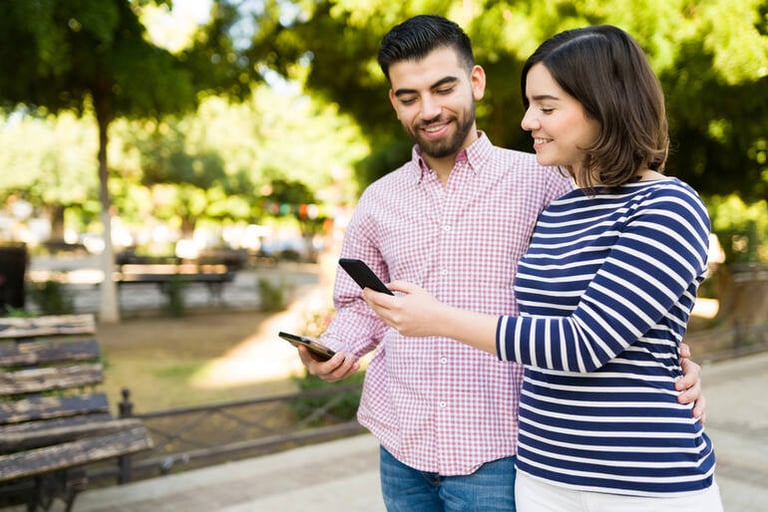
Of course, it introduced new forms of uncertainty too. Anyone recovering from toxic experiences like surviving the tactics narcissists use during a high-conflict divorce develops trust issues. But it got rid of some older ones. Another rule that changed is who gets to make the first move. Online dating disrupted a lot of social habits around initiation. In traditional settings, people often felt trapped inside gender expectations, timing games, and awkward public dynamics. Online, the first step can be smaller, softer, less intimidating. A message is not the same as walking across a room. A reply does not require the same performance as an in-person approach. For many people, that created a new kind of freedom. It allowed shyer people, busier people, more thoughtful people, and people outside conventional dating scripts to participate more fully.
From First Glance to First Line: The New Language of Attraction
That shift made dating feel more democratic in some ways. Not perfect, but more open. It also changed what people notice first. In real life, first impressions used to be driven by voice, body language, style, smell, timing, luck, and eye contact. Online, the first layer became something else: photos, words, tone, fragments of personality, small choices in self-presentation. That made communication more important, sometimes in good ways. People began reading each other before meeting each other, and reading signs of interest. A bio, a line, a joke, a certain kind of honesty could spark interest before physical chemistry had even entered the room.
And that changed the art of attraction. Suddenly, being interesting was not only about how you looked across a dinner table. It was also about whether you could express something real in a few sentences. Whether you could sound warm instead of generic. Whether you could make another person curious enough to continue. In that sense, online dating rewarded a different kind of presence. At its best, it made room for people who may not have always dominated in traditional social scenes.
Dating with Intention: Clarity and Scale in the Online Era
It also made people more intentional. Not always, of course. There is still plenty of confusion, avoidance, inconsistency, and nonsense in modern dating. But online dating introduced a new habit: naming what you want earlier. In offline life, relationships often grow out of ambiguity. Friends became something else. Casual encounters blurred into half-relationships. People drifted into situations without language for what was happening. Online dating, by contrast, pushed questions forward. What are you looking for? Something serious? Casual? Open? Long-term? Just meeting people? Not everyone answers honestly, but the structure itself changed the culture. It made the intention more visible. That is not a small thing.
It gave people more permission to date on purpose. And then there is scale, which changes everything for better and worse. When you suddenly have access to many more people, dating becomes less romantic in one sense and more hopeful in another. Less romantic because the process can feel more practical, even overwhelming. More hopeful because you are no longer confined to the tiny radius of your existing life. A person who feels out of place in their local dating scene can look further. Someone with specific values, interests, or life goals can search more deliberately. Someone who wants a global outlook instead of a narrow one can actually live that preference instead of just imagining it.
That is part of why a platform like online dating for singles has real appeal. It addresses one of the things that many feel privately desire, which is not an increase of choice, but an expanded sense of possibility. Having an opportunity to encounter other people outside your immediate circle, in particular, local dating begins to feel claustrophobic or stagnant, and there is something truly optimistic about the fact that one can do so. It is not always the case that people require the same pool but an improved one. At times, they require an alternative horizon. Pacing was also altered in online dating. Individuals now know one another in layers. You can first exchange messages, then have longer conversations, then take voice notes, then have a video call, and finally get to meet each other. That would have been a weird chain at one time.
From Fate to Participation
Now it feels normal. In some ways, it is even helpful. It gives people a chance to establish comfort before the full intensity of a real-life date. For those who are cautious, introverted, healing from something, or just tired of wasting evenings on obvious mismatches, this slower ramp can be a gift. Not every old dating rule deserved to survive. Another major shift is that online dating has made people more aware of compatibility. In the past, chemistry often got the opening scene, and compatibility had to catch up later. No,w many people screen for values, lifestyle, communication style, relationship goals, and even emotional tone much earlier. That does not make dating less romantic. It just means attraction no longer gets to operate alone without any questions asked. The fantasy of “we met, and it just happened” has been replaced, at least partly, by a more grown-up question: can our lives actually fit together? This might not be as glamorous, but, frankly speaking, it is sometimes healthier. Simultaneously, online dating compelled individuals to be more self-conscious.
At least it allowed them to be. When you are making the profile, selecting the photos, creating a bio, determining what to say first, and what you are seeking, you are engaging in a weird self-editing process. Yes, that process may be superficial. But it may also make things clear. What kind of energy do you have? What do you want the people to know about you? And what is it that you want? The internet dating process is something that makes many people realize that they never considered how to react to those questions until the time of need came. Yeah, internet dating altered the principles of encountering others. It liberalized dating, brought it into the open, more deliberate, searchable, verbal, and in some cases, emotionally exhausting.
It eliminated certain barriers and formed new ones. It provided access, choice, language, and reach to people, reshaping dating app interactions in the process. It also compelled them to be more explicit and speedy regarding attraction, effort, and intent. But perhaps the greatest change is not that complex. It contributed to a feeling of not being fated to meet someone but to participate. And that is not so bad a thing. People still want surprises. They still desire chemistry, story, magic, and coincidence. None of that disappeared. It now exists in a world in which connection is no longer restricted to whoever may be standing next to you. The fact that the introduction was done on a screen did not mean that love was no longer real. It has only just begun to come in a new route. An alternative path is just what is required sometimes.


Comments 0
No Readers' Pick yet.