







Grill Safety 101: Essential Tips To Protect Your Family This Summer
 Story by:
Food and Cooking Blog
Story by:
Food and Cooking Blog
The use of outdoor cooking is a vital part of summer life since Americans grill more than three billion times a year. The risks are substantial. Home fires involving grills, hibachis, or barbecues average 10,600 annually and cause about 10, 100 injuries and 37 million dollars in property damage. In the past 10 years, grill injuries have also been on the rise, by 18 percent, and nearly 210,000 patients were enrolled in emergency departments in 2012-2021 due to accidents with grills. It has been estimated that nearly 9,500 people each year are burned due to grill fires and hot surfaces, and young children, under the age of five years, are subjected to contact burns. Considering that 13 percent of grill owners have experienced some accident in the past, appropriate installation, monitoring, and maintenance are very important to avoid injuries and negligence claims.
Grill safety is also a way in which individual responsibility is displayed, as more and more people are starting to meet in the summer and hold dates in their backyards. Having friends over or coordinating a cookout in the home allows one to show the ability to prepare and be aware and respectful of the well-being of others. A neat and clean grill that is safely placed away from buildings, in conjunction with close attention to the cooking process, creates a mood of a home-cooked meal, which is easy-going and pleasant. With the establishment of a safe atmosphere, dialogues are bound to flow naturally, and the moments that are to be remembered are characterized by human touch as opposed to avoidable accidents.
Setting Up Your Grill For Safe Summer Cooking
The right place to start your safe grilling season. Grill placement will make the difference between a great barbecue and a disaster. The safety regulations advise that you place your grill at least 10 feet from your house, deck railings, and any other burning material. The space makes a critical buffer area that will prevent fire. In order to grill, you require a flat, smooth surface. The best foundation is concrete or stone patios since they remain stable and would not be affected by catching fire. The owners of wooden decks must receive a non-flammable grill mat or concrete backer board to install under. Do not install your grill on an unstable surface likely to tip it over.
Design a safety zone: It should be a 3-foot zone around your kitchen with the kids, pets, and combustible objects out. Experts recommend an additional zone of 6 feet. In the event of a host disregarding simple space and a guest being hurt, ConsumerShield could assist people to learn about the way the liability would be assessed under an injury involving the property of another individual.
It is important to note that overhead space is also important. Store grills out of the eaves, hanging trees, and covered porches. The rules are even stricter in multi-family houses – it is prohibited to use grills on a fire-escape or an enclosed balcony. The general wind flow is to be used in setting the location of your grill. Intelligent positioning prevents the smoke from blowing into your house or into the grounds of your neighbor, which will keep the safety and the neighborly relationship intact.
Essential Gas Grill Safety Tips And Charcoal Grill Safety Tips
Burns and harmful circumstances can be avoided with the help of the correct use of your grill. Gas grills and charcoal grills have varying safety measures; thus, knowing the difference between them will reduce the occurrences of fire breakouts, property damage, and severe injuries. The gas grill safety begins with leakage detection. Gas grills have almost an annual fire incident at home, and are triggered by gas leakages. The experiment is not difficult; one only needs to take water and dish soap in the same amount, pour the mixture onto all hoses and connections, and then turn on the tank valve without burners on and watch the bubbles. A bubbling leak implies that there is an immediate necessity to replace the damaged part. Hacking hoses is not a secure way out. Propane tanks ought to be placed outside, erectly, and on a smooth surface, not in the sunshine. Store them at a distance of at least 10 feet away from buildings or combustible substances.
Tanks should not be kept indoors or in a closed area where the temperature could have risen to a point of more than 120°F. They should stay outdoors. The safety of a charcoal grill begins with regulated lighting. Briquettes should be laid out in a pyramid, and lighter fluid should follow on before setting fire. Hot coals are also dangerous when lighter fluid is added. A more controlled way is the chimney fireplace starter. Separate the coals and do not discard any of them for 48 hours after cooking. Aluminum foil is placed around ashes to exclude the chances of accidental fires that may cause liability issues. This same sense of care is extended into dating. Avoidable emotional flames can be caused by rushing the reaction or dumping someone because of a minor argument.
Rather, allow dialogues to calm down, pause, and speak concisely. Most good dating tips revolve around waiting, not taking things personally, and following up thoughtfully and considerately-all the aspects that develop trust and lessen needless discord. A relationship that is thoughtfully tackled in terms of both heat and emotion has far greater opportunities of developing safely and in a stable way. The safety of the grill shows preparation and awareness when you are hosting a backyard dinner or a guest at your place on a summer evening. Checking of connections, proper management of heat sources, and extinguishing of coals are good indications of responsibility. An environment that is secure promotes easy discussion and mutual pleasure. Careful hosting is a sign of reliability- a quality that builds up trust and creates an impression.
Preventing Common Grilling Accidents And Burn Injuries
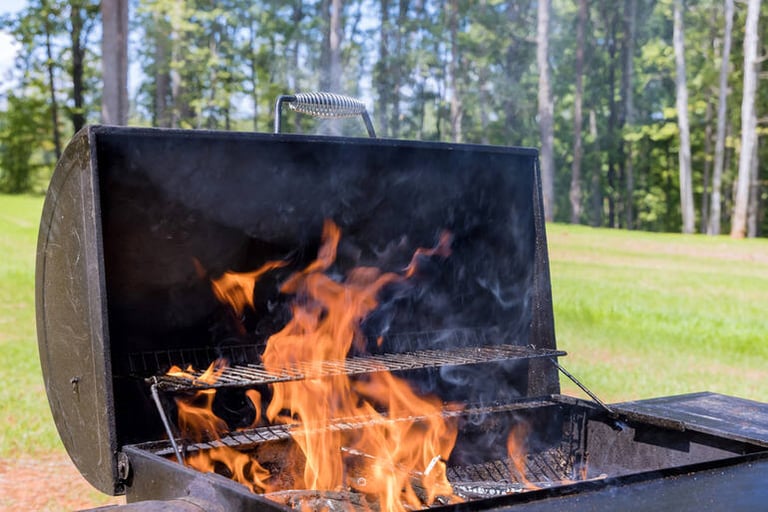
Grills start more than 10,600 home fires each year. Your best defense against these incidents is watchfulness. Flare-ups can be prevented by routine cleaning. NFPA records that one out of every five grill fires is a result of dirty grills. The grates and grease trays must be washed down after every use to eliminate the accumulations that can easily be exposed to fire. Removal of excess fat in meat also contributes to minimizing the drippings, which can cause sudden flames develop. A flare-up should not cause panic. With a gas grill, it is safe to switch off the burners and close the lid to eliminate oxygen. Transferring food to colder areas until the fires are extinguished is most effective on charcoal grills.
This rule is applicable in the process of navigating dating sites. The first step towards avoiding misunderstandings is being clear, ensuring that your profile is true, there is no emotional buildup of not reaching out to your partner, and making intentions clear early. When the conflict heats up, it is not a time to act! Take a step back, take a break in the conversation, and allow the conversation to cool. Considered responses and deliberate communication will help make sure that it will not lead to an unjustified conflict over insignificant sparks online.
Never throw water on a grease fire; it makes flames spread instead of putting them out. Keep an ABC fire extinguisher close by since it works well to curb grease and gas fires.
Clear safety rules protect everyone:
- Keep kids 3 feet away from your grill
- Watch children at all times, kids under five suffer almost half of all contact burns
- Stay away from loose clothing that might catch fire
- Keep your eyes on the grill at all times
Your propane tanks should stay upright and outdoors, away from sunlight and temperatures above 125°F. Charcoal users should let the coals cool down completely for 48 hours before throwing them away.
Safe Grilling, Strong Impressions
The process of safe grilling begins with the correct installation, equipment, and routine safety habits. Your grill should be at least 10 feet away from buildings to lessen the probability of joining the 10,600 number of grill-related fire cases recorded annually. Always clean the grill after use to avoid the development of grease, which is one of the major causes of flare-ups. The owners of the gas grill are expected to conduct a leak test once in every cooking session, whereas charcoal users should leave the coals to cool down before they can dispose of them. Creating a clear safety space around the grill can also be used to prevent young children from contact burns.
Preparation is an outcome of any meeting. The ability to control when it is needed most and having a fully rated fire extinguisher nearby, as well as knowing how to manage the most frequent grill problems, gives you control when it is needed most. All these are considerate and responsible steps, particularly in cases where you are planning a backyard date or a summer get-together. Guests do not miss when things are well handled. Controlled and safe cookout provides room to have some easy talk, quality time, and summer memories without unnecessary accidents.
The same happens with dating. Planning confidence- selecting the appropriate environment, getting all the details in advance, and foreseeing the minor glitches may make the whole process seem effortless. The ability to listen with attention, respect, and respond to embarrassing situations or situations that may be awkward is an indication of emotional maturity. When one feels secure and valued, the dialogue becomes easier and friendlier, the bond is built, and the period one spends with another becomes unforgettable due to the appropriate motives.
Comments 0
No Readers' Pick yet.